

Applications of AR and VR in Warehouse Management
Augmented reality and virtual reality are transforming the operations of warehouses. Such tools simplify work processes, increase safety and accuracy of work, as the tools are able to give the necessary information in real time and the exact position needed by the employees. This is the way AR and VR bring significant transformations to major warehouse processes.

Order Picking
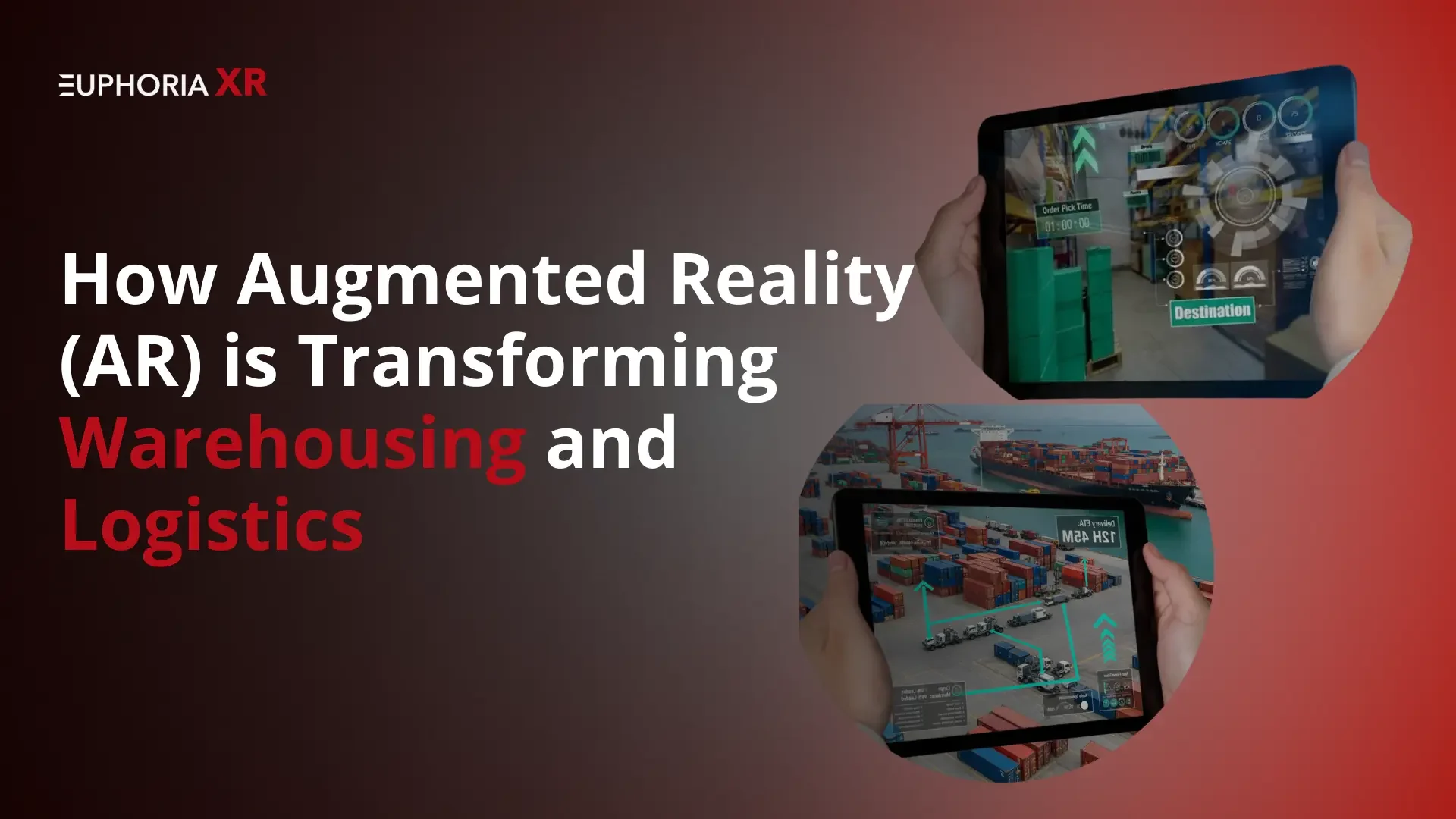
The order picking process is one of the most time-consuming activities in a warehouse, but Augmented Reality is changing how it works. AR displays glowing arrows that guide workers directly to the correct aisle and bin, providing real-time visual directions instead of manual searching. With order picking AR in Logistics, teams can locate items faster, reduce errors, stay hands-free, and significantly improve picking accuracy and fulfillment speed.
Inventory Management
The shelves are scanned by workers visually. AR reads barcodes instantly. It syncs real-time stock levels. It eliminates manual counting errors.
Training & Onboarding
The new employees are taught things in VR simulations. This saves the time of training since they have the opportunity to practice without the interruption of operations. PwC research discovered that VR learners develop four times quicker than their classroom counterparts.
Transportation & Delivery Support
AR assists employees in getting trucks loaded properly. It can show weight limits and packing patterns of safe transport.
Real-Time Data Access & Synchronization
The workers are able to access the details of items, stock numbers, and order status without using handheld devices. They can see everything in sight.
Wearable Technology in Logistics
The AR is further enhanced by wearables.
Common Warehouse Wearables:
Voice-picking headsets
AR smart glasses
Ring barcode scanners
Wrist computers
These devices minimize the use of hands and assist the workers in accomplishing their work quickly.
Benefits of Implementing AR in Warehouses
The augmented reality generates quantifiable enhancements throughout the warehouse functions. It assists the workers to work with a lot of speed, with fewer errors, and they do their work confidently. These advantages have direct impacts on the support of productivity, safety, and long-term cost reductions.
Increased Productivity and Efficiency
AR enables easy visual guidelines, thereby wasting less time on hunting for things. Employees can accomplish their work in reduced time durations since they do not rely on their memory or paperwork to complete their duties. This can increase throughput per day and reduce the delays.
Enhanced Safety and Accuracy
AR can point out risks, restricted areas, or wrong behavior before its occurrence. Employees are kept safe since they get real-time notifications. Instruction will be accurate as it will be in their field of view.
Error Reduction
A majority of the errors in the warehouse are caused by confusion or misidentification. AR leads to the removal of guesswork since the right item, bin, or barcode is immediately visible. The reduced number of errors results in less number of returns, less number of complaints, and a smooth flow of operations.
Faster Order Fulfillment
Online directions decrease pick paths and minimize downtimes between tasks. This results in faster packing and delivery. Quick orders will equally enhance customer satisfaction, particularly in the high-demand industry such as the e-commerce market.
Cost Savings and Competitive Advantage
Fewer errors, less training time, reduced walking distance, and increased output reduce the operating costs. Warehouses that utilize AR have a high competitive advantage since they are faster and more dependable as compared to traditional warehouses.
How to Integrate AR in Logistics (Step-by-Step Guide)
AR’s successful adoption needs a systematic approach. These processes assist the warehouses in eliminating errors and creating long-term value. The steps facilitate the fact that AR enhances the correct processes and gradual growth throughout the organization.

Step 1: Identify Key Use Cases
Begin by identifying those tasks that would help the most. The strongest areas are typically order picking, inventory counting, and training. Select processes in which time wastage or errors are significant to be able to measure improvements easily.
Step 2: Create an Implementation Strategy
Undergo established targets, budgets, and schedules. Establish the desired image of success. Ensure that your warehouse management system is AR-connected. Proper planning also eliminates any delays and guarantees easy onboarding.
Step 3: Collaborate With AR/VR Solution Providers
Collaborate with partners who are familiar with work in the warehouse. They can create new capabilities, develop AR tools to work with the existing systems, and lead teams through implementation. This makes it less technical and faster to adopt.
Step 4: Run Pilot Projects
Start small before scaling. Test AR with one of the workflows or one of the teams. Evaluate picking speed, errors, training, and comfort of the workers. When the results turn out to be true, extend to other zones or departments gradually.
Case Studies and AR in the Warehouse Experiences by EuphoriaXR
The practical examples reveal the strength of the impact of augmented reality. These businesses had tried AR at operational warehouses and saw quantifiable results in terms of speed, accuracy, and training results.
TTEC: Immersive VR Experience for Engagement and Training
EuphoriaXR collaborated with TTEC, a customer experience and contact call center service provider that designed and developed a three-part 360-degree VR application, which allows users to explore the “TTEC Difference” regardless of location anywhere in the globe. This was done to provide clients and future recruits with a realistic insight into the operations of TTEC to facilitate the engagements and the recruitment spread.

EuphoriaXR designed a complete VR experience running on an immersive 360 active video alongside a dedicated VR app compatible with a variety of VR platforms. It also incorporated strategic distribution aspects such as kiosk and presenter modes in order that the sales teams could easily set up the experience at client meetings and events. The outcome was a new and effective tool that contributed to the brand recognition of TTEC, faster deal closing, and the acquisition of the best employees because it allows the audience to personally test the capabilities of the company.
Total PARCO: Enterprise Virtual Reality Experience
The Total PARCO VR Experience is a VR project created at the enterprise level that aimed to provide a brand and facility experience that is immersive with the use of interactive virtual environments.

EuphoriaXR has created a high-quality experience of VR, which allows users to closely experience the spaces of Total PARCO and have an interesting and realistic way of communicating the complex operations, brand values, and scale, without the need to be physically present. This project brings to focus EuphoriaXR’s expertise in developing large-scale, high-quality VRs as an enterprise solution that has experience in crafting immersive storytelling, environments, and virtual interaction in industrial and corporate environments.
Smart Warehouse AR Implementation
An intermediate-sized warehouse that deals with distribution embraced augmented reality to enhance order picking and the accuracy of inventory. The AR smart devices provided employees with all the picking paths, bin positions, and item information directly in their field of view. In several weeks, the picking time was decreased, the number of errors decreased significantly, and new employees became productive sooner than previously. Inventory changes were made more accurate since they were scanned using barcodes, and their current inventory was updated instantly. This broad case study demonstrates the ability of AR in warehouse settings to increase speed, accuracy, and efficiency of the workforce without undergoing a complete overhaul of the system.
Recommendations for Warehouse Operators
A simple and systematic approach can allow warehouses to implement AR with ease. These activities enhance winning and minimize interference to the teams.
Start Small
Take one process, like picking or counting. This will enable your team to be taught the technology without overwhelming them. Small wins build confidence.
Train Teams
The use of AR devices should have explicit instructions for the workers. Training eliminates fear and enables the workers to have confidence in the system. Professionally developed teams are quicker in adopting new tools.
Digitize Processes
AR is most effective when your processes are computerized. Substitute paper checklists with an electronic form. Hook up your warehouse management system to real-time tools. This establishes a pure basis of AR.
Measure ROI
Comparable number of track movements with and without AR. Pick time, error rates, training hours, and output. It is clear data that would prove the worth of an investment and be used to make future improvements.
How EuphoriaXR Helps Implement AR in Warehouses?
EuphoriaXR offers customized AR and VR solutions, which assist warehouses in modernizing their operations using immersive technology. The team creates AR experiences, such as picking, loading, navigation, and inventory visibility, and VR training spaces, where employees can train safely before heading to the warehouse floor. EuphoriaXR will also consult and assist companies in finding out high-value use cases and creating a seamless integration strategy so that organizations can adopt AR and VR confidently and enhance general efficiency without becoming a logistics partner.
Challenges and Limitations of AR & VR in Warehousing
Though AR and VR are associated with significant benefits, they are also associated with practical challenges. Awareness of such limitations assists firms in planning better and adopting the technology with limited risks.

Defining Business Value
Warehouses have to determine the areas of maximum impact of AR. Not every task needs AR. The high-value activities will be selected, like picking or counting, to have a good RO.
Integration with Existing Systems
AR applications should integrate with warehouse management systems. Inappropriate integration may slow down operations and increase mistakes. These are avoided through up-front technical planning.
Training and User Adoption
Certain employees can be at a loss for words concerning new technology. Fear is eliminated by simple training and putting it into practice. The workers are likely to adopt the procedures more easily when the benefits are known.
Data Privacy and Security
AR systems use real-time data. This data must stay secure. It is the responsibility of firms to ensure that sensitive inventory data is safeguarded as well as to ensure adherence to internal policies.
Maintenance and Cost
Wearables and smart devices are to be updated, cleaned, and repaired. Software, support, and training costs are also involved. Maintenance planning makes it stable in the long term.
Future of AR and VR in Warehouse Management
AR and VR will keep spreading as a significant part of the tools used in contemporary warehouses. More facilities will deploy immersive systems as easily as they become more affordable in order to enhance the speed and accuracy.
Lighter & Cheaper AR Glasses
The AR glasses are being made smaller, more comfortable, and cheaper. This renders it useful in the daily operations of warehouse teams.
Advanced VR Training
The VR training will provide a more simulated training, which will enable the workers to develop the skills fast and safely in a simulated environment before being introduced into the live operations.
AI + Automation Integration
AI will complement AR by providing employees with tailored information and real-time feedback. AR is also going to liaise well with robots and automated systems to have faster and smarter workflows.