Drive More Shares and Interaction With Branded AR Filters
Euphoria XR builds custom augmented reality solutions that supercharge businesses with 3D visualization, boost training, captivate customers, and provide interactive experiences seamlessly across mobile devices, web browsers, exhibitions, and physical environments.
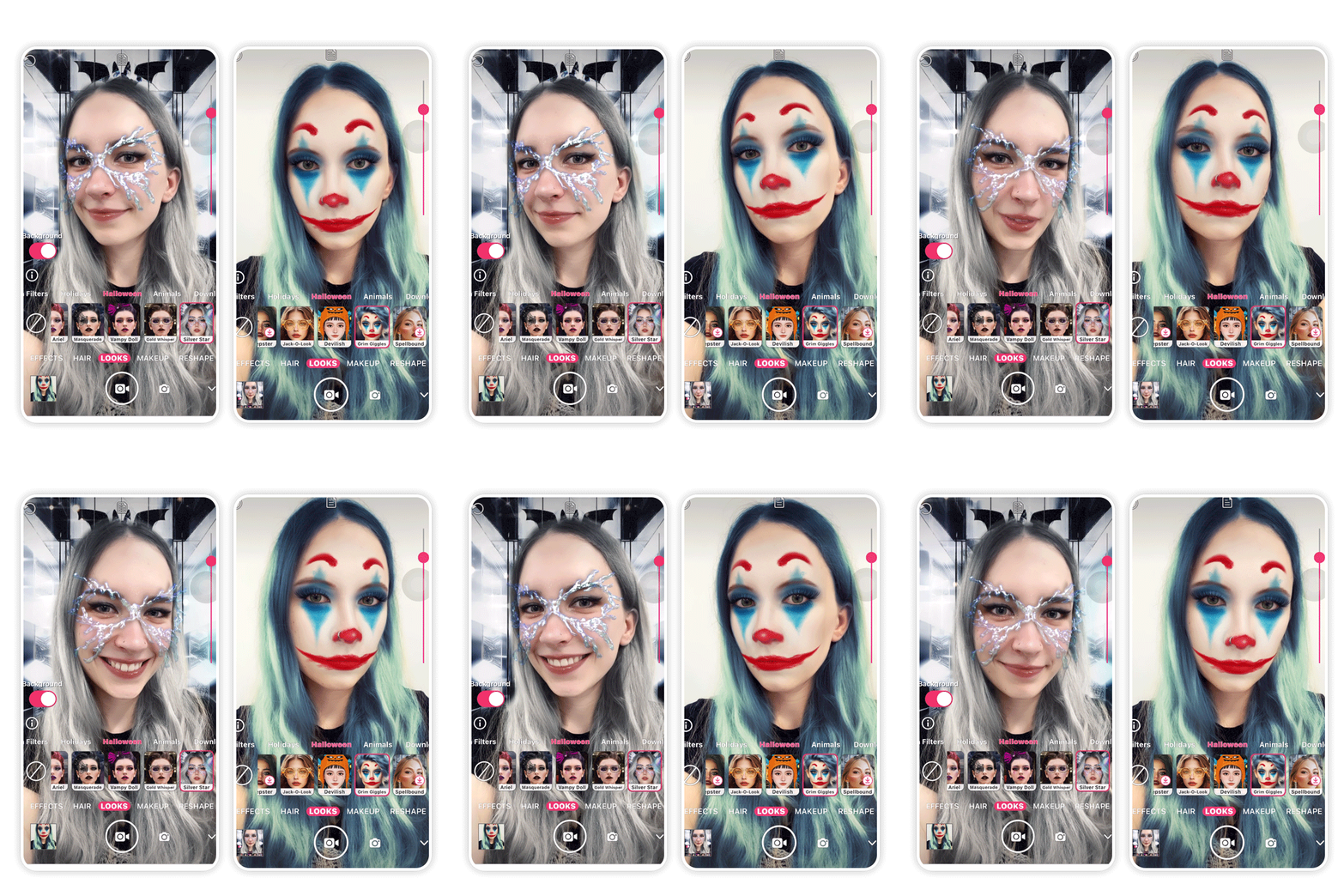
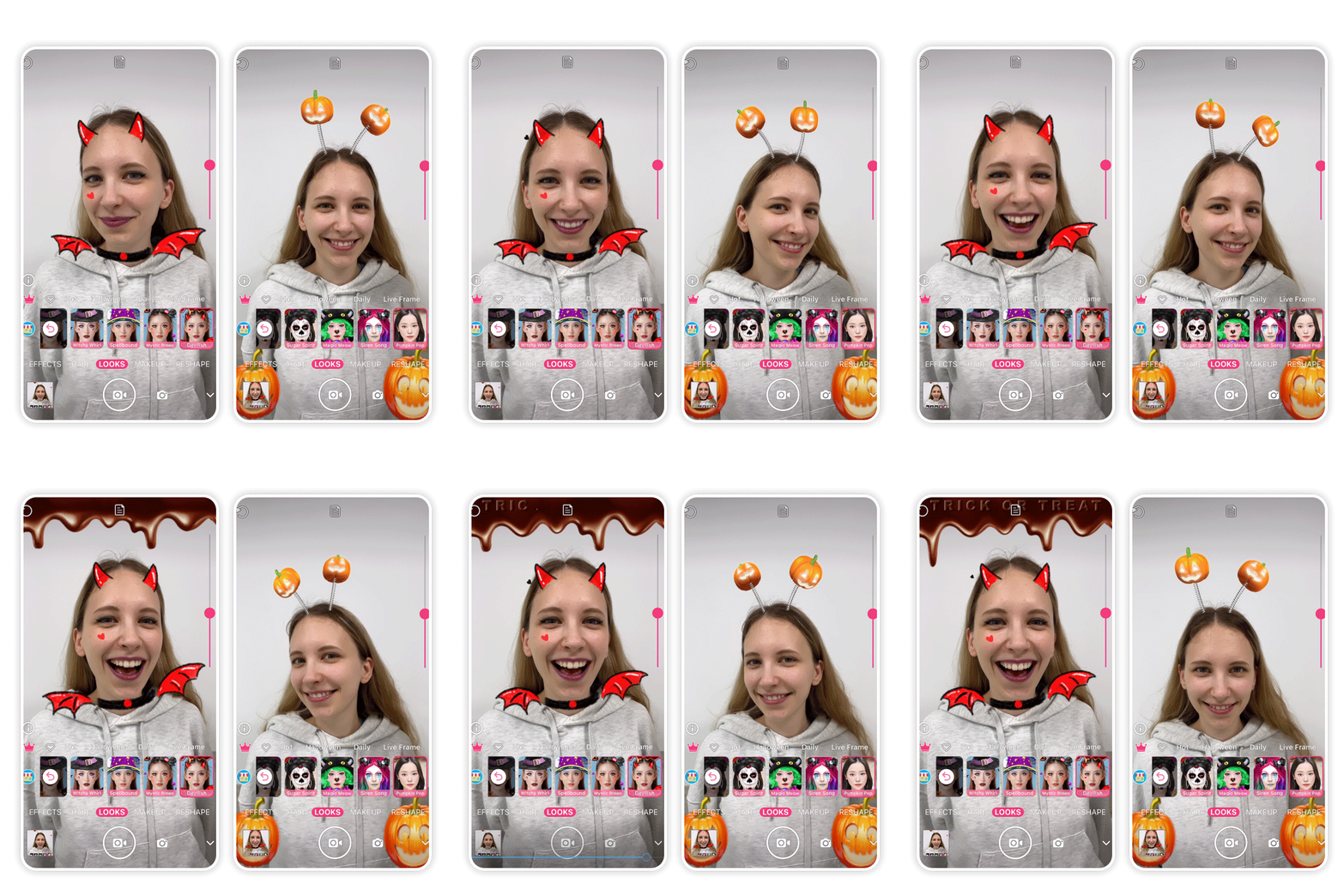
Branded AR filters are personalized augmented reality experiences that present opportunities for users to engage with your brand through face enhancement, virtual try-ons, animation, games, or immersive environments on social platforms. They help get people involved, share, remember your brand, and reach your campaigns. Bring your brand to life with a memorable custom AR filter today.
We Create Augmented Reality Filter Solutions for Your Brand
Face Filter
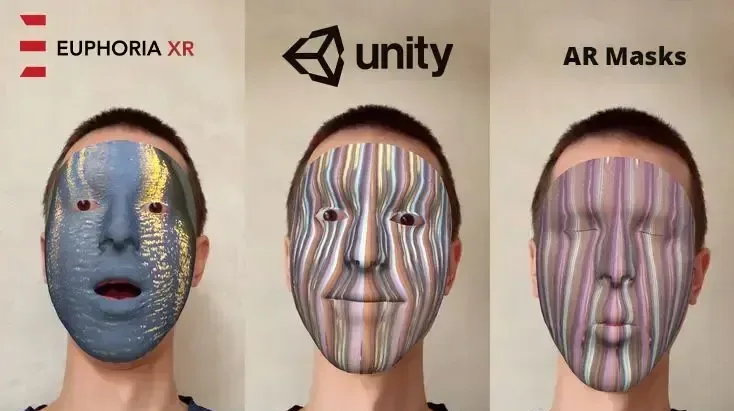
We develop custom AR face filters with accurate face tracking, 3D assets, animation, and branded effects. Users can use masks, accessories, characters, or visuals of a theme while playing the game. These AR social filters help the brands to boost user generated content, participation, sharing, and viewership of campaigns. Every experience is intuitive, responsive, consistent, and focused on the brand message for modern campaigns on supported platforms, devices, audiences, and digital campaign touchpoints all over the world.
Try on Products
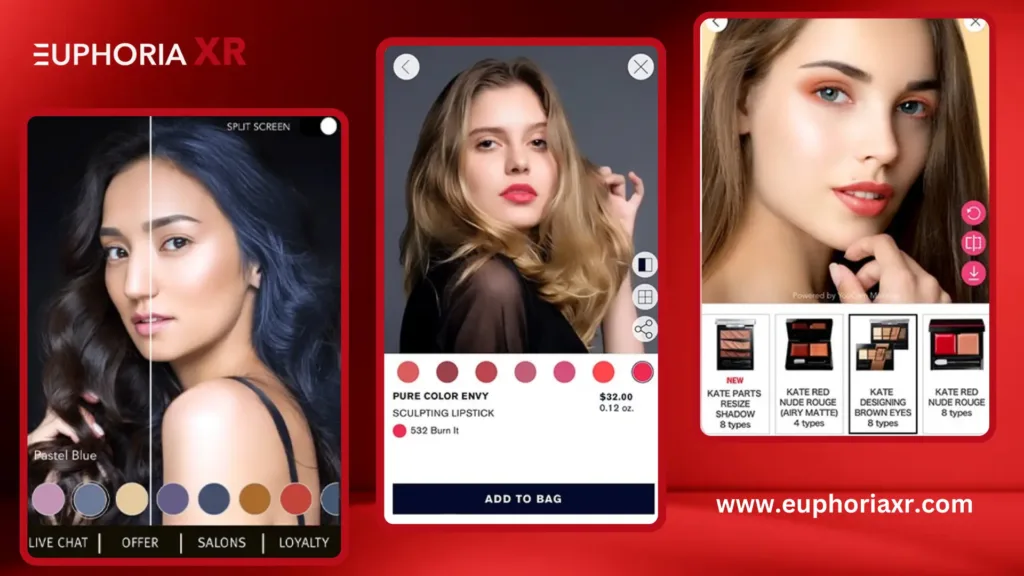
Our virtual try-on AR experiences help customers preview products before making a purchase. Brands can feature cosmetics, glasses, apparel, and other items with interactive Augmented Reality. Accurate tracking and realistic visualization enable users to know what the products they are interested in are planned to look like or fit like in real time. They can be used for product discovery, building customer confidence, engagement, and interaction in ecommerce experiences, social campaigns, websites, mobile experiences, and digital brand activations around the world.
Mini Games
Enhance your campaigns with hands-on AR mini games, designed to be enjoyed together. We design branded challenges, scoring games, gesture interaction, face-controlled games, and immersive ideas around campaign objectives. These AR gambling activities can lead to higher levels of engagement, session length, reengagement, and social sharing. Brand elements, messaging, rewards, and calls-to-action are all seamlessly woven into the fabric, and each game is built to perform seamlessly on supported devices, browsers, platforms, and digital channels.
Image Trackers
Integrate physical marketing assets with digital content with image tracking AR experiences. Users can scan packaging, posters, labels, ads, or branded imagery to unlock animations, videos, 3D models, product info, or interactive experiences. By adding engaging, measurable interactions, stories, education, and discovery, these marker-based AR experiences enhance traditional materials without complicating the process with unnecessary digital steps or even complex apps and menus for the user.
AR 3D Objects
Take your products, characters, models, and branded assets into reality with interactive AR 3D products. Users can examine objects from their various aspects, inspect details, resize models, and engage with animated objects in real time. The solutions are in 3D, see-augmented: product visualization, product launches, demonstrations, product education, marketing campaigns. They assist brands with communicating intricate concepts in more consumable terms, and provide viewers a spatial and immersive way to investigate digital information on supported devices and conditions.
AR Portals
Bring the audience into a unique and immersive branded space with original AR portal experiences. By passing through a virtual doorway, users can be moved from their current physical environment to showrooms, campaign worlds, destinations, events, product spaces, or story-driven environments without moving. They provide a strong visual impact and inspire further investigation than typical content, making them an effective AR activation. Augmented reality portals can be utilized for brand launches, experiential marketing and tourism, entertainment, and interactive storytelling that aims to get the attention and engagement of the public.
Create Smarter Healthcare Experiences with Augmented Reality
Create immersive AR filters to amplify engagement, turn viewers into active brand users, and encourage sharing.
We utilize modern AR platforms, 3D tools, and web technologies to create branded AR filters that operate smoothly across social platforms, browsers, devices, campaigns, and engaging customer experiences everywhere.
Lens Studio
TikTok Effect House
ZapWorks
DeepAR
8th Wall
Banuba
PlayCanvas
Unity
Three.js
WebXR
Our Custom AR Filter Development Process
The development of a custom AR filter is part of our planning, designing, manufacturing, testing, and releasing process to ensure a high-quality user experience for all campaigns.
01
Campaign Strategy & Planning
We establish campaign objectives, define the target audience, outline platform specifics, envision the creative direction of the AR filter, and determine ideas to facilitate interaction starting right after launch, all without forgetting to measure campaign performance.
02
Creative Concept & Design
Our designers build the visual idea, the user journey, effects and animation, and the branded elements, making it easy and intuitive for users to share across platforms, effortless to recognize, engaging, and intuitive.
03
Interactive AR Development
We develop interactive AR filters with face tracking, world effects, animations, product elements, and user interactions using the right technologies for your selected platforms, audience, and campaign objectives, successfully online.
04
AR Filter Testing & Optimization
We test AR face filters and interactive effects on supported devices and platforms, assessing tracking accuracy, loading speed, visual quality, responsiveness, and usability, prior to an interactive experience becoming available to the public on a global scale.
05
Publishing & Launch Support
Once approved, we create your social media AR filter, understand how to submit it to your platform, and ensure it is ready for launch, after which we shall do our utmost to make sure your audience gets a smooth experience online.
02
Creative Concept & Design
We take the time to line up everyone involved, with a solid roadmap, maps of the user journey, interactions, content flow, approach to the platform, user milestones, budget, and delivery before design and development starts and everyone’s expectations are aligned.
04
AR Filter Testing & Optimization
Our developers create the approved augmented reality application, embed three-dimensional assets, include interactivity, synchronize necessary systems, and tweak performance on the selected devices for the supported operating systems to ensure stable use.
Build Branded AR Filters That Get Shared
Build highly engaging AR filters to involve the audience as active participants and make your brand easier to remember, share, and interact with.
Augmented reality filters are digital images that alter the face, environment, or camera feed of a user in real time with the help of their smartphone, tablet, or AR device.
Beauty, fashion, retail, automotive, entertainment, and consumer products are among the many categories leveraging AR for virtual try-ons, interactive campaigns, product previews, branded social media experiences, and more.
AR is utilized for virtual try-on, navigation, product visualization, training and education, gaming, retail experiences, maintenance, and interactive marketing campaigns.
Device compatibility, performance, accessibility, tracking, development costs, and platform constraints can all be issues for AR experiences. By careful optimization, testing, and experience design, these difficulties may be minimized.
Yes. Augmented reality solutions can be integrated into websites, content platforms, learning systems, product catalogues, analytics, and other business software applications.
Yes. AR is expanding in all segments of retail, marketing, ecommerce, entertainment, training, navigation, and social media. Branded AR filters are particularly effective as they provide audiences the opportunity to directly engage with campaigns via cameras, mobile devices, and web experiences.
AI processes data, identifies patterns, and is able to predict or make decisions, whereas AR overlays digital information on the user’s physical world. Technologies can be integrated, from tagging with AI to face tracking, object recognition, personalization, and interactive augmented reality filters.
No. Augmented reality and artificial intelligence are separate technologies. AR brings digital information to the real world, and AI processes information and does intelligent things. However, AI can make AR experiences better via tracking, recognition, personalization, and automation.
VR replaces the real world with a completely virtual environment, whereas AR overlays digital components onto it. AR is often more useful for product previews, try-ons, and branded filters.