










Augmented Reality Cake Creating Magical Experiences for Events & Celebrations - Euphoria XR

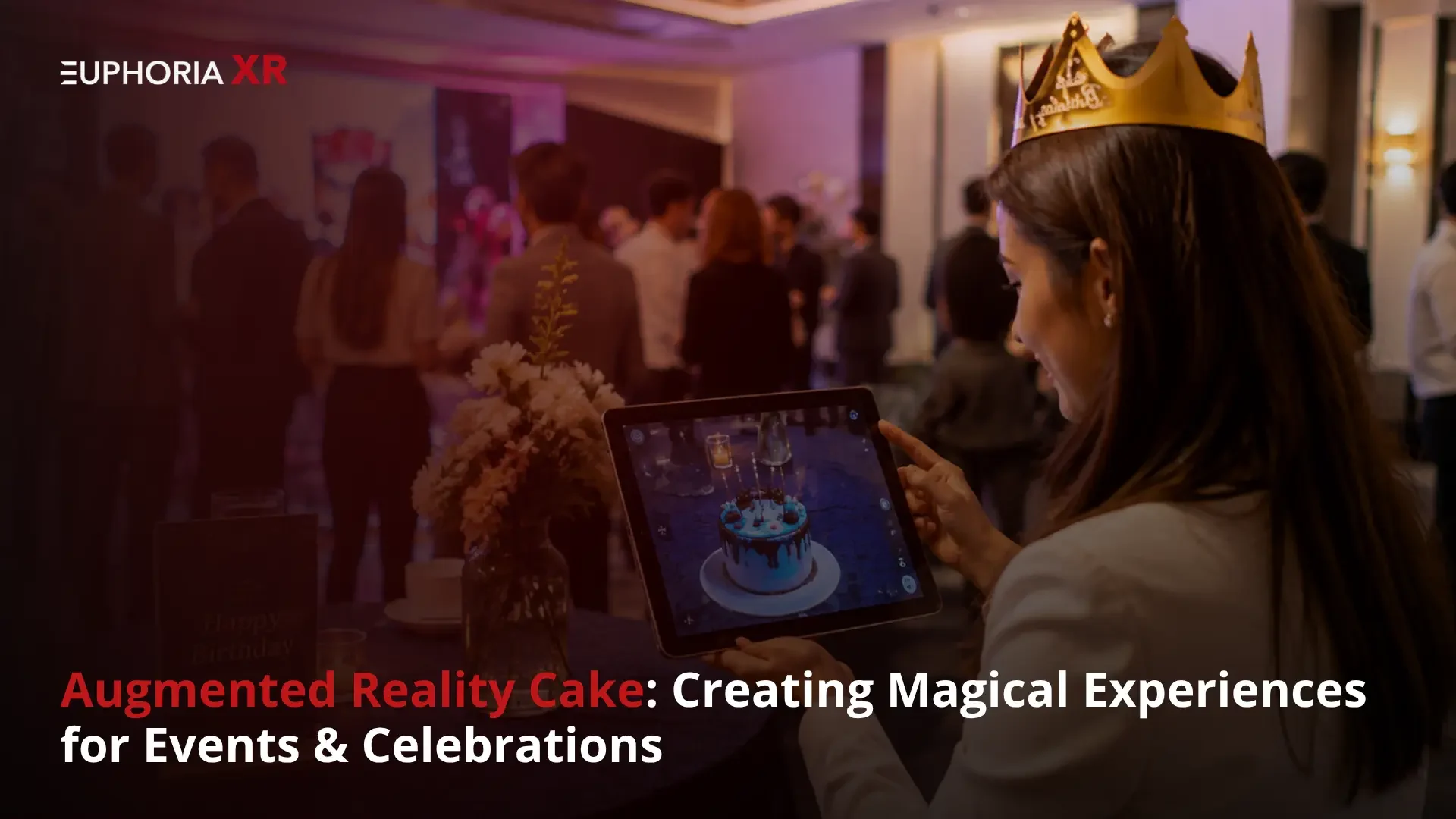
Augmented Reality Cake: Creating Magical AR Experiences for Events & Celebrations

Share Article:
Augmented Reality Cake Creating Magical Experiences for Events & Celebrations - Euphoria XR
Picture of Amelia Rose Content Strategist & Copywriter
Amelia Rose Content Strategist & Copywriter
Content Strategist & Copywriter
Summarize with:
Table of Contents
Table of Contents
Share Article:

TL;DR

An augmented reality cake combines a physical or digital cake with virtual content.

A guest can scan a QR code or point a phone at a photo on the cake. The AR experience can then show:

  • 3D animations

  • Videos and pics

  • Birthday desires

  • Wedding recollections

  • Interactive characters

  • Games

  • Brand messages

  • Digital effects around the cake

AR cakes can work at birthdays, weddings, anniversaries, corporate events, product launches, and different celebrations.

WebAR can also permit users to open a few experiences in a mobile browser instead of installing a dedicated app. Aircards, for example, created company AR cupcakes that used picture recognition and internet-based AR to display films and 3D animations.

Imagine bringing out a birthday cake. Everyone gathers around it. Then a person points a cellphone at the cake, and tiny balloons rise from the icing. A 3D man or woman appears beside the candles. A private video starts off involved playing.

The cake has not changed. What people see around it has changed

That is the idea behind an augmented reality cake. It mixes a real cake with virtual content viewed through a smartphone, tablet, or any other AR tool.

It could make birthdays more playful, weddings more personal, and branded occasions simpler to recall. The virtual layer can encompass motion pictures, 3D gadgets, animation, messages, games, or even interactive memories.

The technology is no longer confined to an AR app. Web-based AR can also deliver augmented content to compatible devices through the web.


What is an Augmented Reality Cake?

An augmented reality cake is a physical or virtual cake enhanced with digital content together with 3D animations, motion pictures, snapshots, text, video games, or interactive outcomes. Guests generally view the AR content through a cellphone, tablet, or compatible AR device.

A real cake can act as the trigger for the experience. When a person scans a QR code, picture, topper, emblem, or printed design, virtual content appears on the display screen around or above the cake.

Unlike projection mapping, the virtual results aren’t projected directly onto the cake. They are delivered to the person’s view of the real world via augmented reality.

An augmented reality cake can be used for birthdays, weddings, anniversaries, company activities, product launches, and different celebrations wherein organizers want to make the cake more interactive and remarkable.

Turn your occasion concept into an interactive AR experience visitors can experiment, explore, and share. 

How Does an Augmented Reality Cake Work?

An augmented reality cake works by means of connecting a real-world cake or visual trigger with digital AR content. When a guest scans the cake using a phone or tablet, the AR machine recognizes the picture or surface and places virtual content into the camera view.

The method usually works like this:

  • Choose an AR cause: A QR code, cake topper, logo, printed photo, or nearby event card can start the experience.

  • Open the AR experience: Guests get entry to it through a browser or dedicated AR app.

  • Recognize the goal: Image recognition or AR tracking identifies the cake, marker, or surrounding surface.

  • Load digital content: The device displays 3D models, animations, films, pictures, textual content, sound, or interactive elements.

  • Track motion: AR generation keeps the digital content placed successfully as the guest moves the phone.

  • Enable interaction: Guests may also tap objects, monitor messages, play games, take AR images, or discover extraordinary digital scenes.

WebAR can make this system less complicated for event visitors because a few stories can open directly in a mobile browser without requiring an app download.


What Can You Do With an Augmented Reality Cake?

An augmented reality cake can do a lot more than show one animation. It can flip the cake into an interactive part of the occasion by way of combining personalised content material, enjoyment, storytelling, and visitor participation. 
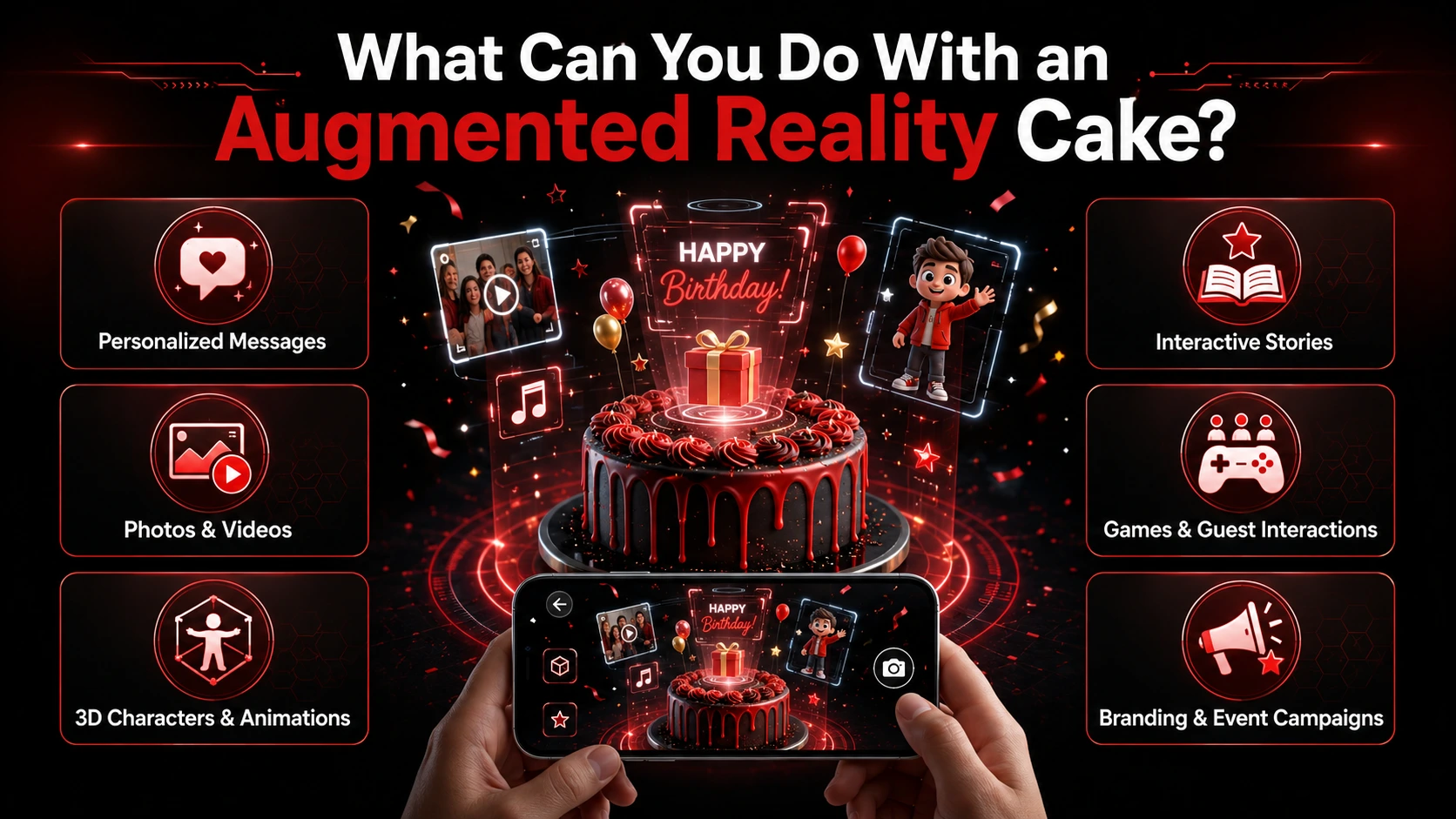
What Can You Do with An Augmented Reality Cake - EuphoriaXR

Reveal Personalized Messages

AR can make a cake display messages created for a particular individual or occasion.

A birthday cake should display the man or woman’s name, age, or a unique greeting. A wedding cake should display the couple’s names, wedding date, or a thank-you message for guests.

You can also use AR to show hidden messages one after another, growing a small wonder before the cake is reduced.

Display Photos and Videos

Photos and movies can turn an AR cake into a virtual memory display.

Guests would possibly scan the cake and notice:

  • Childhood pics

  • Family reminiscences

  • Engagement pictures

  • Birthday greetings

  • Wedding movies

  • Messages from buddies dwelling abroad

  • Company or occasion films

This works specifically well for weddings, anniversaries, milestone birthdays, and family celebrations where recollections are an important part of the occasion.

Add 3D Characters and Animations

3D content could make the cake feel as though it’s coming to life.

For instance, an augmented reality birthday cake could show a dinosaur walking across the candles, a rocket launching into space, or balloons floating above the cake.

A wedding ceremony cake might display virtual flowers, butterflies, stars, or ornamental animations around the tiers.

Brands can also use 3D products, mascots, logos, or characters in the course of company events and launches.

Create Interactive Cake Stories

AR can flip a cake right into a short virtual story.

Instead of showing one effect, the experience can circulate through numerous scenes.

For a marriage, guests would possibly see:

  • How the couple met

  • Engagement pictures

  • Important recollections

  • The wedding ceremony date

  • A very last thank-you message

A birthday experience should show unique moments from the person’s life before ending with an active birthday greeting.

Interactive storytelling makes the cake a part of the occasion narrative rather than just a decorative centerpiece.

Add Games or Guest Interactions

An AR cake also can encompass simple games and interactive activities.

Guests may be capable of:

  • Blow out virtual candles

  • Catch falling items

  • Find hidden items

  • Answer minutiae questions

  • Tap animated characters

  • Unlock wonder messages

  • Take AR pix

  • Vote in an event poll

Short interactions normally work best at activities because visitors can understand them fast and take turns without slowing down the birthday party.

Integrate Branding and Event Campaigns

Brands can use augmented reality cakes as part of experiential advertising and event campaigns.

A branded cake, cupcake, or topper may want to cause:

  • A 3D product model

  • A marketing campaign video

  • A promotional message

  • A virtual coupon

  • A product launch animation

  • A branded game

  • A social media effect

  • A contest or giveaway

This permits corporations to attach a physical event object with digital content while giving visitors something more attractive than a popular brand or published message.


Augmented Reality Wedding Cake Experiences

An augmented reality wedding cake may be beneficial both before and throughout a marriage.

Before the event, AR can assist couples image extraordinary cake designs in the real venue. During the birthday party, it is able to add photos, animation, messages, and storytelling around the completed cake.

This gives the marriage cake two roles. It can help with planning first, then emerge as part of the guest experience later.

Visualizing a Wedding Cake Before Ordering

It can be hard to choose a big wedding cake from a flat picture.

AR offers couples another choice.

A realistic virtual cake can appear on a real table through a phone or tablet. Couples can then have a look at the cake from extraordinary angles before making their final decision.

They may also examine:

  • Number of degrees

  • Cake height

  • Colors

  • Decorations

  • Floral details

  • Topper designs

  • Table placement

  • Overall length within the venue

This idea has already been used in the meals industry. Magnolia Bakery collaborated with Kabaq on an AR experience that allowed engaged couples to view digital wedding cakes, rotate them, and zoom in on layout details.

For bakeries, this can make design discussions less complicated. Instead of asking couples to assume the result, they can display a better virtual preview.

Turning the Wedding Cake Into a Digital Story

After the real cake reaches the venue, AR can turn it into part of the couple’s tale.

For instance, visitors might experience the cake and spot:

  • The couple’s names appear above it.

  • Their first photo comes into view.

  • Engagement pictures follow.

  • Digital flowers grow across the degrees.

  • The wedding ceremony date appears.

  • A thank-you message closes the experience.

Other thoughts consist of:

  • A timeline of the relationship

  • Messages from own family participants

  • Photos from the engagement

  • Virtual butterflies or flowers

  • Animated wedding initials

  • A digital guestbook

  • AR picture consequences around the cake

The AR experience must shape the style of the marriage. A simple wedding ceremony may need only a smooth animation and brief message. A large themed birthday party may also match a longer interactive tale.

Partner with an experienced AR development company to build a custom cake, wedding ceremony, birthday, or branded occasion activation. 


Augmented Reality Cake vs Projection Mapping Cake

Both augmented reality cake and projection mapping cake add digital effects to a physical cake, but do so in different ways. Augmented reality overlays virtual content onto the cake via a phone or tablet screen, whereas projection mapping utilizes a projector to project visuals directly onto the cake.

Feature Augmented Reality Cake Projection Mapping Cake
How Guests See It Through a Phone, Tablet, or AR Device Directly on the Physical Cake
Main Technology AR Tracking, Image Recognition, WebAR Projector and Mapping Software
Projector Required No Yes
Phone Required Usually Yes No
3D Objects Around the Cake Yes Mostly Limited to Projected Surfaces
Personalization Can Vary by Guest or Device Usually the Same for Everyone
Interaction Can Include Taps, Games, Buttons, or AR Effects Usually Visual Rather Than Interactive
QR Codes Commonly Used Usually Not Needed
Venue Lighting Impact Can Affect Tracking Strongly Affects Projection Visibility

AR is more effective for engaging visitors personally. Projection mapping works better if everybody needs to see the same visual impact at the same time.


How Brands Can Produce Augmented Reality Cakes for Events?

Brands can produce augmented reality cakes by combining a physical cake with an AR trigger, digital content, and a mobile device. The procedure should awareness on what visitors see, how they get right of entry to it, and how without problems it really works at some point of the event. 
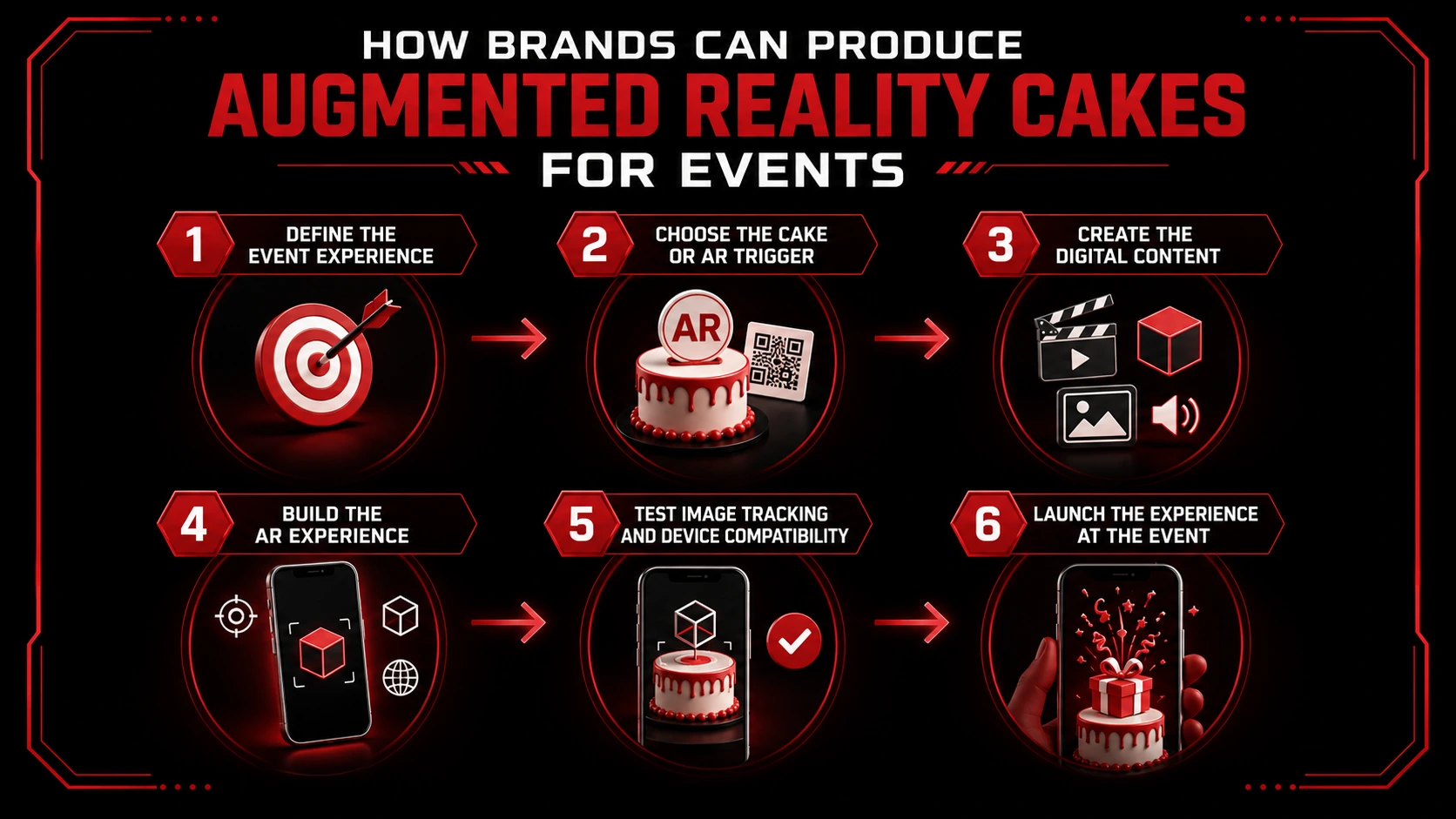
How Brands Can Produce Augmented Reality Cakes for Events -EuphoriaXR

Define the Event Experience

Start by way of deciding what ought to happen after someone scans the cake.

The experience would possibly:

  • Reveal a product

  • Show a branded video

  • Launch a 3-D mascot

  • Display a message

  • Start a recreation

  • Unlock a proposal

  • Create an AR photo second

Choose one clear intention so the experience does not feel overloaded.

Choose the Cake or AR Trigger

Decide what visitors will test or point their camera closer to.

Possible triggers consist of:

  • Printed cake toppers

  • Edible images

  • Logos

  • Cupcake pics

  • QR codes

  • Cake bins

  • Table cards

  • Event signage

A designated and easy-to-apprehend visual normally works better for picture monitoring than a plain cake floor.

Create the Digital Content

Build the content that appears after activation.

This might also consist of:

  • 3D models

  • Animations

  • Videos

  • Photos

  • Text

  • Sound

  • Interactive buttons

  • Games

  • Digital offers

Keep the content lightweight, cell-friendly, and suitable for the event subject.

Build the AR Experience

Connect the physical cause with the digital content material using the proper AR technology.

The experience may additionally use:

  • Image popularity

  • Image tracking

  • Surface monitoring

  • QR code activation

  • WebAR

  • A devoted AR app

  • 3-d rendering

  • Interactive controls

WebAR can be beneficial for occasions due to the fact visitors may also get right of entry to the experience through a mobile browser without downloading an app.

Test Image Tracking and Device Compatibility

Test the finished experience before the occasion.

Check:

  • iPhone and Android devices

  • Different display screen sizes

  • Bright and low lighting

  • Camera angles

  • Scanning distance

  • Busy backgrounds

  • Wi-Fi and cellular information

  • The final revealed or bodily AR trigger

Testing in the actual venue is ideal due to the fact that lighting and environment can affect tracking.

Launch the Experience at the Event

Make the activation simple and clean to understand.

Use a clean education including:

Scan the cake to show the wonder.

The guest adventure must be simple:

  • Scan the QR code or open the AR hyperlink.

  • Allow camera permission.

  • Point the phone at the cake or trigger.

  • View or engage with the AR content.

  • Capture or share the experience if wanted.

The best AR cake experience must feel smooth from the first scan to the very last interaction.
Need custom development support for WebAR, image monitoring, or 3D interactions? Hire an AR developer to bring information to your next occasion experience.

Where Can AR Cakes Be Used?

AR cakes can work anywhere, as a cake is already a part of the birthday party. They are specifically useful when organizers want to feature a digital surprise, tell a story, or encourage guests to engage.

Common use instances encompass:

  • Birthday events: Add 3D characters, video games, greetings, or virtual candles.

  • Weddings: Show couple memories, animations, names, or digital decorations.

  • Anniversaries: Reveal vintage images, movies, and personal messages.

  • Baby showers: Add themed animations, video games, or family messages.

  • Graduations: Display congratulations, college reminiscences, or future goals.

  • Corporate activities: Show branded videos, emblems, mascots, or corporate messages.

  • Product launches: Reveal 3-D product models, demos, or promotional content.

  • Exhibitions and change suggests: Use cakes or cupcakes as interactive logo touchpoints.

  • Employee celebrations: Mark organization milestones, awards, or crew achievements.

  • Restaurant promotions: Add AR outcomes to seasonal desserts or limited-time campaigns.


Why Use Augmented Reality Cakes at Events?

An augmented reality cake provides more than an ornament. It gives guests something to look at, discover, or engage with at the same time as retaining the cake in the middle of the moment.

Key benefits encompass:

  • More visitor interaction: Guests can scan, tap, play, or monitor content.

  • Personalized experiences: Messages, pictures, and animations can suit the individual or occasion.

  • More storytelling space: AR can put content on a cake that would never be healthy physically.

  • Better photo opportunities: 3D effects and animations could make photographs and motion pictures more exciting.

  • Flexible virtual content: Videos, messages, or pictures can be up to date with out converting the cake itself.

  • Useful for branded occasions: Companies can connect physical desserts with products, offers, or campaign content.

  • Supports specific occasion styles: AR may be playful for birthdays or more elegant for weddings and formal events.

The excellent results come when AR supports the birthday party in place of becoming the whole focus.


What Do You Need to Create an AR Cake Experience?

Creating an AR cake calls for both a physical occasion element and digital content. The precise setup depends on how simple or interactive the experience wishes to be.

You may also need:

  • A cake or cake-related trigger: Such as a topper, edible picture, brand, or local card.

  • A QR code or AR link: To help guests open the experience quickly.

  • An image target or monitoring approach: So the system knows where to place digital content.

  • AR software or improvement platform: For building and delivering the experience.

  • 3D models or animations: If the experience includes digital items or characters.

  • Photos or motion pictures: For personal messages, reminiscences, or branded content.

  • Mobile-friendly design: So the experience works well on smaller monitors.

  • Compatible smartphones or tablets: Guests need a supported device to view the AR.

  • Internet access: Usually required for browser-based AR and online assets.

  • Testing across gadgets: Check distinct phones, browsers, lighting situations, and camera angles.

  • Clear visitor instructions: People ought to know a way to trigger the experience without help.

A simple setup can use one cause and one quick animation. More complex reviews may include a couple of scenes, games, custom 3D models, and customized content.


The Future of Augmented Reality Cakes and Digital Celebrations

Increased personalization, interactivity, and accessibility are probable outcomes for augmented reality cakes.

Different guests may be able to see different things from the same cake in the future. One individual may receive a private message, while another sees a photo memory or a game.

Digital invitations, guestbooks, event apps, and social experiences can all be connected with AR cakes. The guest messages might be found in a wedding cake. A photo gallery may be unlocked by a birthday cake. A 3D product demonstration may begin with a product launch cake.

Access to event experiences may be made more convenient with browser-based AR, which can also eliminate the necessity for specialized app downloads.

Additionally, personalization might be quicker with 3D assets, animation, and videos created by artificial intelligence.

However, improved technology shouldn’t translate to more clutter.

The finest digital celebrations will continue to be centered on a straightforward goal: making the event more significant, entertaining, or unforgettable for the attendees. 

Have an AR cake or birthday party idea in mind?

Key Takeaways

  • An augmented reality cake combines an actual or digital cake with virtual AR content.

  • AR cakes can display videos, pics, 3D models, video games, messages, and animations.

  • An augmented reality birthday cake can consist of characters, virtual candles, memories, or mini games.

  • An augmented reality wedding cake can help with cake visualization and digital storytelling.

  • AR cakes and projection mapping desserts use exceptional technologies.

  • Brands can produce augmented reality cakes for launches, corporate events, exhibitions, and promotions.

  • WebAR can allow a few reports to open through a mobile browser.

  • Clear monitoring objectives, fast-loading content, and tool testing are vital.

  • Guests must understand how to start the experience in seconds.

  • AR works best when it provides value to the event rather than distracting from it.


Conclusion 

An augmented reality cake can make birthdays, weddings, and branded occasions more interactive by adding films, 3-D results, messages, games, and virtual storytelling to a physical cake. With the right AR trigger, content, and testing, it is able to create a simple but memorable experience for guests. 


Frequently Asked Questions (FAQs) 

It depends on how complex it gets, like the 3D content, animations, little interactions, the platform itself, and even the testing part.

Yes, but if the cake is plain, glossy, or too reflective, it might be harder for the camera to lock in reliably, so you may need a printed topper, an image target, a QR code, or maybe a nearby marker.  

Totally. Different guests can get personalized videos, messages, games, or other content, usually by using unique links or triggers.  

It depends on the scope. Simple experiences are faster, even as custom 3D, video games, and multiple scenes require more development and testing.

Yes, as long as sharing is built in. Guests can often take photos, record videos, or keep other AR output on supported devices.  

Many WebAR experiences do, especially when they’re loading 3D models, videos, or other online content. 

Yes, most of the time. The same AR setup can usually stay, while you update the videos, messages, branding, event dates, or other digital bits. 

Get Started With Euphoria XR
• Award-Winning AR/VR/AI Development & Consulting Services
• Flexible Business Models – Project Based or Dedicated Hiring
• 10+ Years of Industry Experience with Global Clientele
• Globally Recognized by Clutch, GoodFirms & DesignRush

Recent Posts

10 Real-World Examples of Spatial Computing - Euphoria XR

10 Real-World Examples of Spatial Computing

TL;DR Spatial computing immerses digital content within physical environments and enables individuals to interact with them via their movement, gestures, voice, or eye-tracking. Some practical

Company's Stats

Successful Projects
0 +
Success Rate
0 %
Pro Team Members
0 +
Years of Experience
0 +

Let's talk about your project

We are here to turn your ideas into reality