














TL;DR
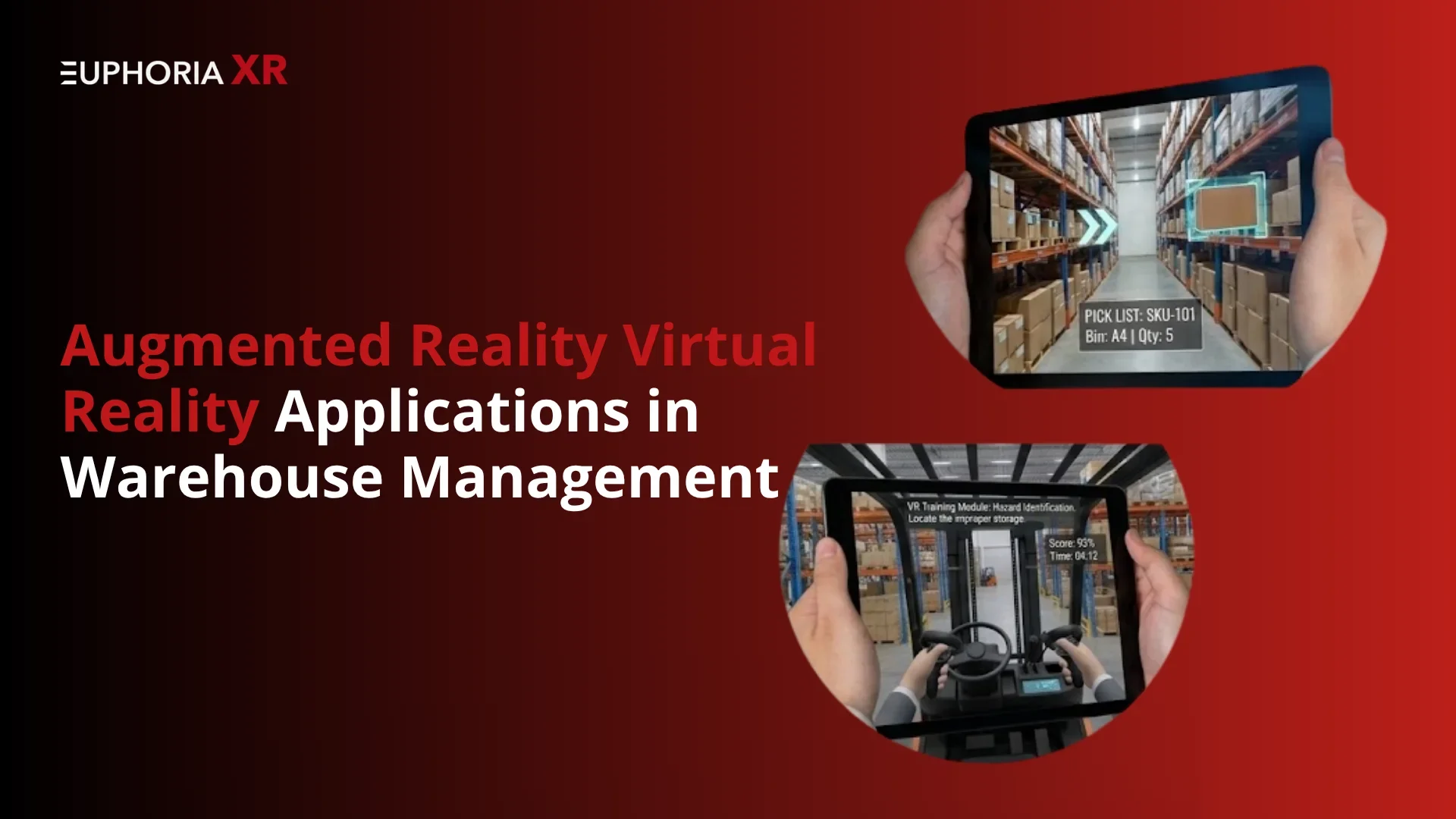
Augmented reality and virtual reality technologies are helping to make warehouse work easier to manage, train, and plan. In physical warehouses, AR enables workers to reduce their reliance on manual tasks, including vision picking, stock verification, receiving, and navigation, among others. The VR applications are primarily directed towards employee training, safety simulations, equipment practice, and the planning of warehouse layouts. Augmented reality and virtual technology can be used hand-in-hand to enhance accuracy, decrease wasted movements, facilitate quicker learning, and perform simulations for warehouses, testing new processes before using them in actual operations.
Warehouses depend on speed and accuracy. A worker has to locate the correct product, select the correct quantity of product, place the product in the correct location, and must not slow down one task to accommodate the next.
However, most warehouse workflows involve handling between shelves, scanners, paper lists, and computer screens. This can lead to an increase in your performance frequencies, confusion, and errors.
Then, augmented reality and virtual reality applications can help in warehouse management.
This technology can overlay directions, product descriptions, picking instructions, and inventory on warehouse personnel and place them at their fingertips. Virtual reality can enable a digital warehouse where employees can try out tasks, conduct training on safety, or even test new layouts, without impacting real-life operations.
Nowadays, AR and VR are increasingly being adopted in practical applications for e-commerce, such as vision picking, AR warehouse picking, inventory management, VR training, and digital twins.
What is AR in Warehouse Management?
Augmented reality in warehouse management is the use of digital information over a worker’s real-world view to guide warehouse tasks. With the help of smart glasses, tablets, or mobile devices, AR can show picking instructions, product information, storage location details, navigation arrows, inventory details, and safety warnings, allowing the worker to continue working.
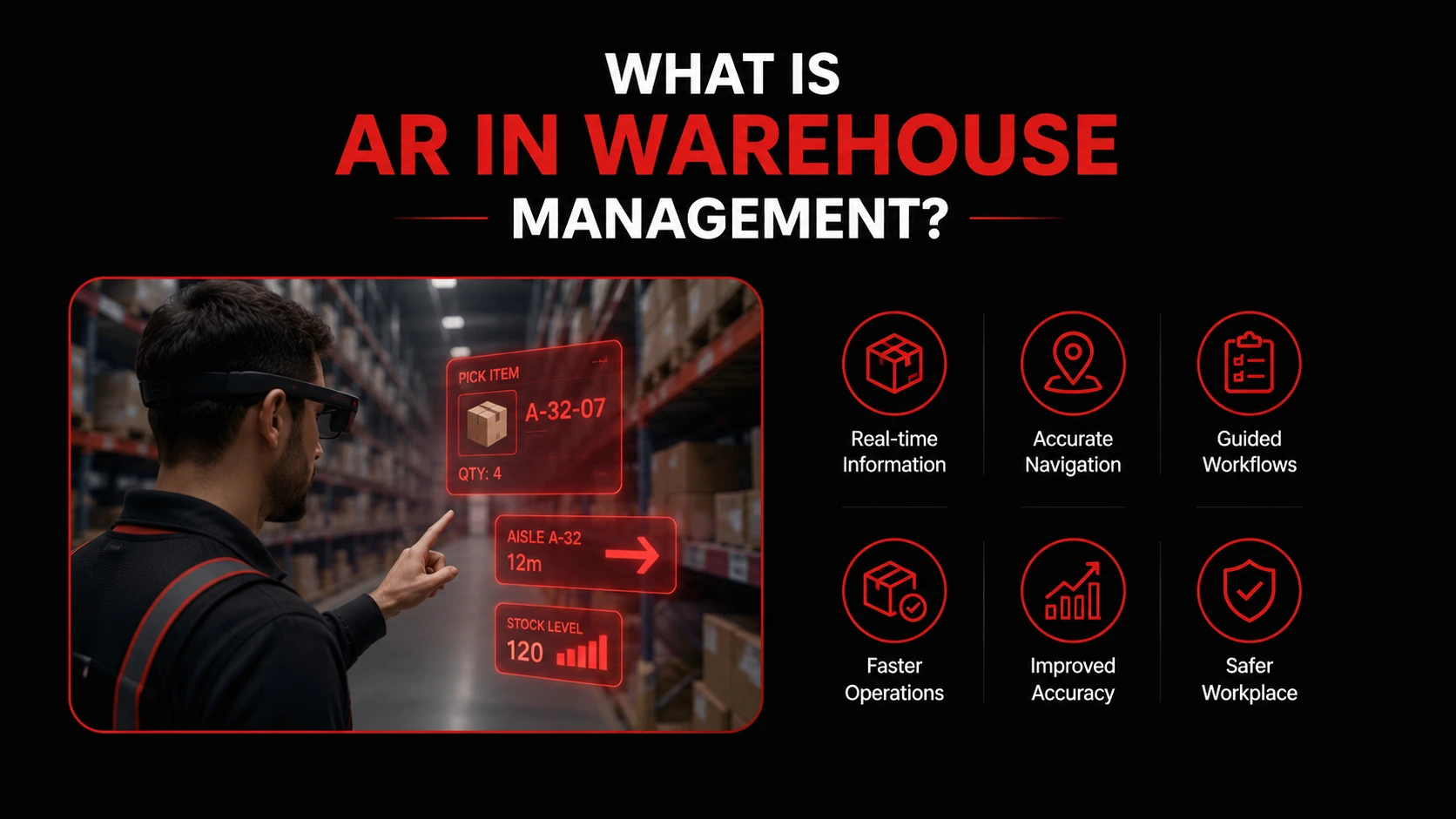
The augmented reality warehouse pairs real-world activities with the data within the warehouse. It’s widely adopted for tasks such as vision picking, AR warehouse picking, inventory management, receiving, put-away, packing, quality checks, and navigation. It assists workers in getting the information they need at the job site rather than continually stepping in and out of their screens or referencing paper lists.
What is VR in Warehouse Management?
Virtual reality in warehouse management is the implementation of technology creating simulated warehouses for training, planning, testing, and simulation. VR Headsets are used by workers to practice tasks in the warehouse without entering the operations area.
VR has been employed on a regular basis for employee training, equipment familiarisation, forklifting, safety training, disaster simulation training, warehouse planning, peak load planning, and other aspects. VR differs from AR as it creates a fully virtual environment in contrast to AR, where digital information is added to a real warehouse.
Why Are Warehouses Adopting AR and VR Technologies?
Warehouses are turning to AR and VR because tasks such as rapid processing, accuracy, training, and access to real-time information are becoming an integral part of everyday operations. Using AR, workers can receive visual guidance to complete live tasks; and using VR, teams can practise, test, and plan operations without interrupting the real warehouse.
Key reasons include:
Faster and more accurate order picking
Increased real-time warehouse information access
Reduced dependence on paper instructions
Hands-free support through smart glasses
Easier inventory identification and verification
Faster employee training and onboarding
Safer practice for risky warehouse situations
Improved warehouse layout and process planning.
Reduction of pickers’ packing and storing errors
Better opportunity to test new workflows before implementation.
Key Augmented Reality Applications in Warehouse Management
Augmented reality can support warehouse tasks from receiving goods to final shipping. Common use cases are visual picking, AR warehouse picking, as well as vision picking, put-away, packing, quality control, and navigating in the warehouse.
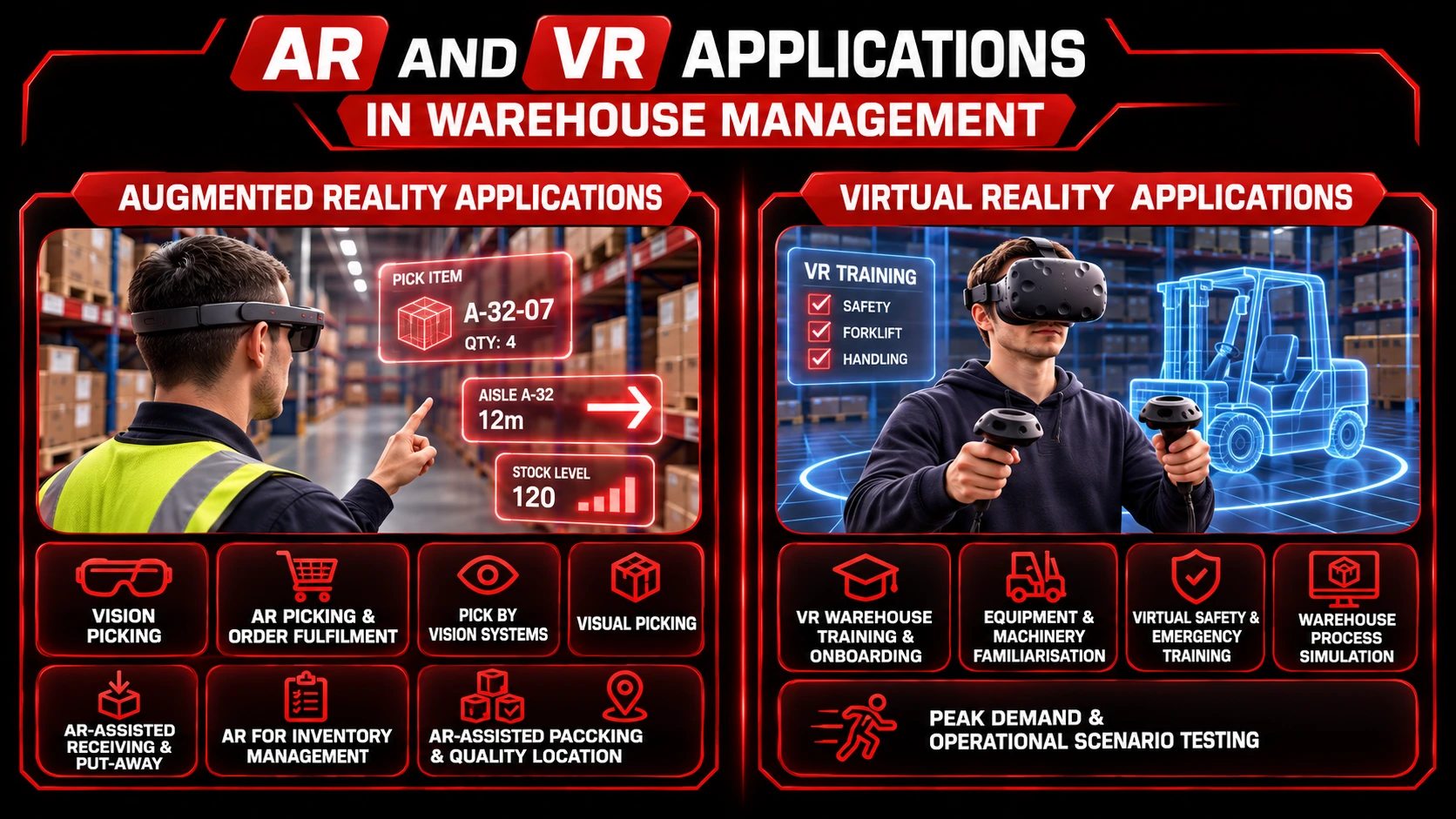
Vision Picking in Warehouse Operations
Vision picking is the presentation of picking instructions directly in a person’s line of sight via smart glasses or a wearable display device. The workers have a clear view of the required aisle, rack, product, and quantity and maintain their hands free to pick.
AR Warehouse Picking and Order Fulfilment
AR warehouse picking guides workers throughout every order by providing visual directions, product information, and quantities. It can aid in reducing search time and further enables quicker and more accurate order fulfilment.
Pick by Vision Systems
A pick-by-vision system is comprised of a wearable display, warehouse software, scanning, and real-time task data. Before confirming a task, allow workers to see the system, so they can see what and where to harvest, as well as how much.
Visual Picking for Faster Product Identification
Visual picking uses identification aids such as pictures, labels, place markers, or digital overlays to ensure a worker gets the right product. It is particularly useful where products appear similar or when there are a large number of SKU’s within a single rack.
AR-Assisted Receiving and Put-Away
AR can guide workers while receiving incoming goods and moving them into storage. Guided by the digital instructions, it can demonstrate what is expected, provide detailed information on storage areas, handling, and the proper put-away location.
Augmented Reality for Inventory Management
AR can provide information on the current position of items as employees look at shelves and storage areas. It eliminates the need to transfer to separate devices for stock checks, cycle counting, replenishment, product verification, and smart glass inventory management.
AR-Assisted Packing and Quality Checks
AR can show packing instructions, packing contents, the necessary packaging, quantities, and quality checkpoints. This allows workers to compare physical objects with the web-based order information before closing and sending the box.
Warehouse Navigation and Product Location
AR navigation can present workers with an arrow and directions on the aisles, rack numbers, product locations, and more, to help navigate the large warehouse. This may save warehouse time in finding inventory and help to navigate new warehouse areas.
Smart Glasses in Warehouse Management
Smart Glasses are wearable devices that provide warehouse information straight in the eyeline of a person working in the warehouse. They are typically employed in warehouse tasks such as vision picking, visual picking, scanning, inventory management, navigating, and checking tasks
The worker can access the next location, the product name, the SKU, quantity, barcode state, or a warning without having to hold a screen.
Smart glasses can be beneficial for hands-free warehouse use cases including:
Order picking
Inventory counting
Product verification
Receiving
Put-away
Packing
Navigation
Replenishment
The glasses are typically connected to a warehouse management system to provide workers with up-to-date information on tasks and inventory up to date; this is known as an effective smart glasses inventory management system.
Virtual Reality Applications in Warehouse Management
The primary use of virtual reality is when appropriate safe training, process testing, or simulation is required in warehouses. It enables employees and managers to practice or learn about the warehouse situation without having to change live operations.
VR Warehouse Training and Onboarding
VR can safely teach new employees how to interact with the warehouse environment, processes, equipment, picking systems, and safety procedures before putting them to real work. Employees are given practice opportunities to revisit training scenarios until they grasp the process.
Equipment and Machinery Familiarisation
VR provides forklift, conveyor, pallet trucks, and other warehouse equipment training controls, procedures, and safety, as well as training for other forklift equipment. It can train employees’ knowledge in advance for the subsequent supervised training with real equipment.
Virtual Safety and Emergency Training
VR can simulate dangerous scenarios like falling goods, obstruction of exit, forklift accidents, equipment failure, or fire. Staff can rehearse appropriate action without risk to themselves or others.
Warehouse Process Simulation
The virtual warehouse allows testing of picking routes, storage processes, worker movements and packing stations, equipment positions, and new picking workflows before implementing any changes in the warehouse physical environment.
Peak Demand and Operational Scenario Testing
VR and warehouse simulations can be used to test how operations react under conditions such as a peak in orders during a season, increased order volumes, staffing issues, closed spaces, equipment failures, or other unusual situations. This enables managers to recognize areas that may be problematic before it gets into the live production environment.
AR and VR for Warehouse Layout Planning
AR and VR can support warehouse teams to plan layouts before making physical changes. VR can provide a virtual warehouse for testing storage areas, storage rack positions, equipment movement paths, and employee movements. Some objects or layouts can be planned and placed on top of the real warehouse with AR to describe how the proposed changes are going to fit.
Common uses include:
Placing of testing racks and shelves.
Organizing pick-up and walking routes
Reviewing forklift and equipment paths
Designing packing and loading areas
Checking available space
Identifying workflow bottlenecks
Testing in new layouts before installation
Supporting digital twin warehouse Planning
Choosing different setup options
Improving worker and equipment movement
Suggested Read: https://euphoriaxr.com/augmented-reality-in-warehouse-and-logistics/
Augmented Reality in Warehouse Inventory Management
With augmented reality, workers can verify stock, count, and locate it while displaying digital data alongside the actual products. This can make inventory work simple, as employees don’t have to roam between warehouses and different screens all of the time.
Popular uses of Inventory are:
Real-time stock information
Product and SKU identification
Cycle counting
Inventory verification
Stock location guidance
Replenishment instructions
Bin and rack identification
Lot and batch information
Quantity confirmation
Identifying inventory differences
Managing inventory of smart glasses.
When properly integrated with precise warehouse management and inventory systems, AR can provide a valuable advantage. If incorrect data is saved, the AR system might show incorrect information, too.
Benefits of AR and VR in Warehouse Management
AR and VR can assist with warehouse operations by providing more information to the workforce, eliminating needless movements, and using teams to practise or test processes in a secure setting. The advantages would vary based on the warehouse use case, system quality, and level of integration.
Key benefits include:
Faster order picking
Improved picking accuracy
Reduced picking and packing errors
Better inventory visibility
Hands-free access to instructions
Faster employee onboarding
Safer warehouse training
Easier equipment familiarisation
Better warehouse navigation
Reduced time spent searching for products
Improved workflow planning
Better layout testing
Easier process simulation
Set of more uniform task instructions.
Increased support at critical operations
AR and VR Warehouse Technology and Hardware
AR and VR warehouse systems typically include displays, cameras, scanning devices, warehouse software, and network technologies. The exact configuration is dependent upon the warehouse’s requirements for picking direction, stock management, training, simulation, and layout planning.