

Have you ever tried to read something in VR and had your eyes strain as a result?
This is the issue that most users continue to experience. To this day, many headsets still have issues with clarity. Text looks soft. Edges are not sharp. Prolonged sessions are fatiguing.
Today, things are likely to change.
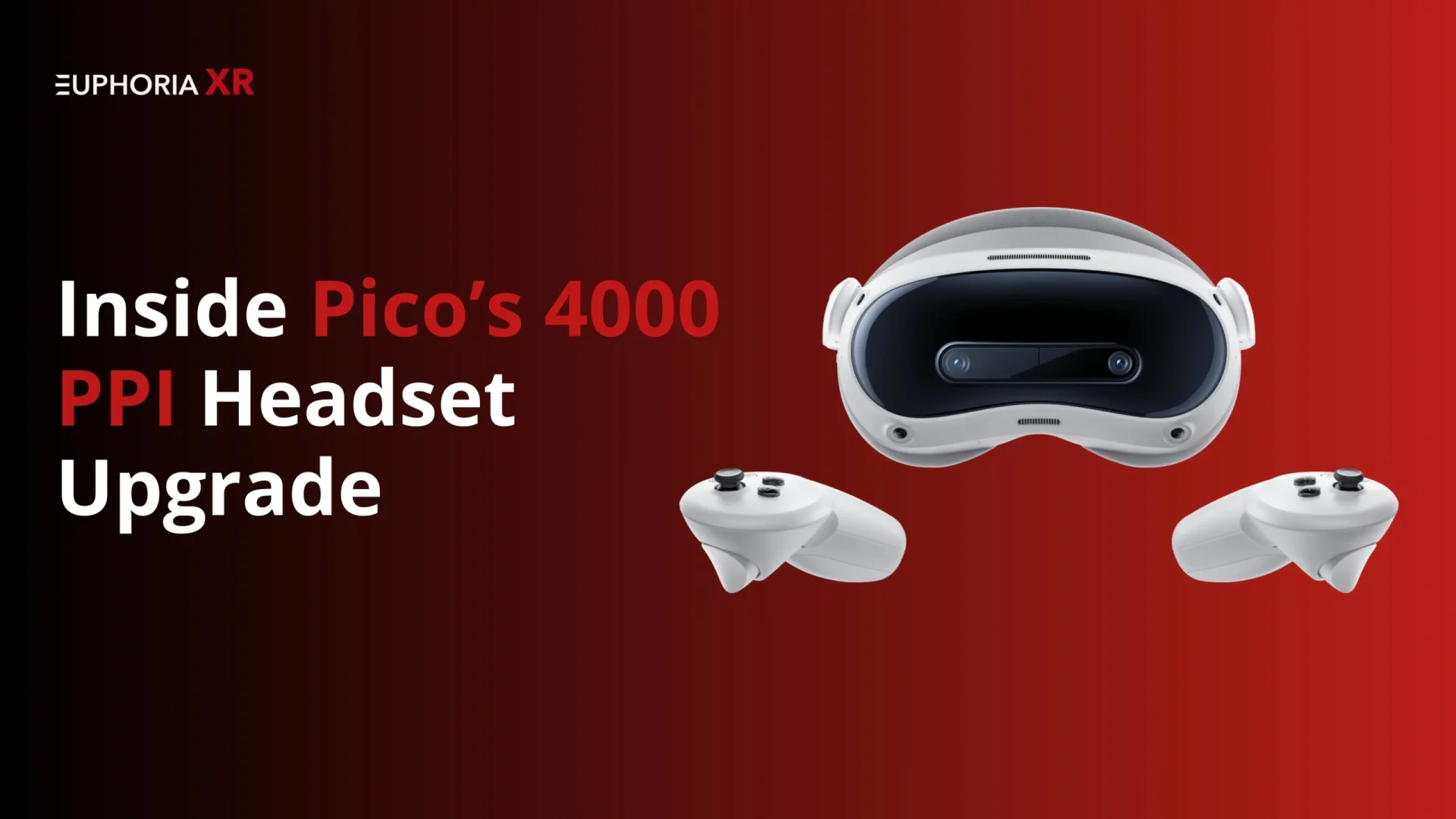
Pico 4000 PPI VR headset brings an enormous leap in display clarity. This is no minor enhancement. It is a significant change.
The pixel density is increased, resulting in sharper images. It also implies increased readability. It is significant to gaming, work, and mixed reality.
If this works as promised, blurry VR could finally be a thing of the past.
What Is 4000 PPI in a VR Headset?
4000 PPI implies that it has 4000 pixels per inch of display.
Simply put, the larger the space with the number of pixels, the greater the detail.
This is important in VR since the screen is too close to your eyes. The image is also magnified using lenses. Low pixel density is noticeable with that.
The following is the change in 4000 PPI:
Writing is crisp and clear.
Small features appear clear.
Edges look smooth
The screen door effect is decreased.
| Display Type | Typical PPI |
|---|---|
|
Older VR headsets |
800 to 1200
|
|
Modern VR headsets |
1500 to 2500
|
|
Pico next-gen VR headset
|
4000
|
The closer a VR headset with 4000 PPI is to the visual clarity of the real world, the higher its resolution. This is pertinent particularly to work, reading, and mixed reality.
Is This the Sharpest VR Headset Yet?
Currently, a majority of VR headsets are concerned with the resolution. However, pixel density and optical quality determine sharpness.
The Pico 4000 PPI VR headset is unique due to its extremely high pixel density.
The following is just a comparison:
| Headset | Display Strength |
|---|---|
|
Apple Vision Pro |
Strong clarity and ecosystem
|
|
Meta Quest 3 |
Balanced performance
|
|
Pico next-gen VR headset |
Ultra-high pixel density |
According to the existing information, Pico is a pioneer in the highest PPI in VR.
But sharpness is not all about PPI. It also depends on:
Lens quality
Pixels per degree
Rendering system
Still, in terms of raw pixel density, this could be the sharpest VR display yet.
Inside the Micro-OLED VR Display: Why It Matters?
The Micro-OLED VR display is what enables 4000 PPI.
In contrast to LCD, micro-OLED has self-lit pixels. The light is generated by individual pixels.
This can have significant benefits:
Black, rather than grey.
Greater contrast, to increase depth.
More accurate colors
Faster response time
Why This Matters in VR?
Text is clear and readable.
Online displays are tangible.
The night scenes are natural.
Reduced eye load with prolonged sessions.
| Feature | LCD | Micro-OLED |
|---|---|---|
|
Contrast |
Lower
|
Very High
|
|
Blacks |
Greyish |
True black |
|
Clarity |
Good |
Excellent
|
|
Pixel density |
Limited
|
Very high |
Display quality is the basis of any next-gen VR headset. Micro-OLED with 4000 PPI makes a significant breakthrough in visual experience.
Develop the high-performance VR and mixed reality solutions designed to meet your business requirements.
Pico Headset Upgrade Features Explained (Project Swan)
The Pico 4000 PPI VR headset is not simply an upgrade of the display. It is an entire upgrade of the system. All components of the device are geared towards a next-gen VR experience. The goal is simple. Make VR more transparent, quicker, and more natural to operate.
Ultra-High Resolution Display (4000 PPI)
The most significant change is the display. The headset has 4000 pixels in a single inch, which offers it a degree of clarity that is difficult to achieve with existing devices. Text is crisp and clear. Minor details are easily discernible. This comes in handy specifically when performing activities such as reading documents, consuming high-quality content, or working in virtual environments. It makes VR closer to the visual clarity of the real world.
Next-Gen Chipset & Performance Boost
The high-resolution display requires good performance to operate. This demand is to be met by the upgraded chipset. It is more efficient in processing graphics and handling mixed reality scenes that are more complex. This creates smoother images and reduced latency. The experience becomes stable even in instances where several elements are running concurrently. This degree of processing power would be required without the high resolution itself.
Eye Tracking and Hand Tracking
VR is becoming more natural to interact with. Eye tracking enables the system to know where you are looking. This enhances concentration, and navigation becomes quicker. Many of the cases do not require controllers because of hand tracking. The menus and objects are able to be touched using the hands. This makes it more user-friendly and immersive. It is also useful in enhancing performance, as only the resources that the user is looking at get concentrated.
Low-Latency Passthrough & Mixed Reality
One of the major components of mixed reality is Passthrough. It allows users to view the real world using the headset. In this upgrade, delay reduction is in focus. The real world view is made to be stable and responsive by faster processing. Digital objects are more easily assimilated into the setting. This renders mixed reality more comfortable and practical in everyday use. It also enhances safety and usability in the case of longer sessions.
Pico OS 6 and Spatial Computing Experience
The hardware is no big deal compared to the software upgrade. Pico OS 6 brings about a better spatial experience. Users can keep numerous apps surrounding them in a virtual space, as opposed to utilizing a single application at a time. It is fluid to alternate between tasks. This makes the headset a real spatial computer. It enables users to work, read, and watch content in one environment without distraction.
These advancements have been combined to produce a high-resolution VR headset that is not only designed to be an entertainment device. It is created to be productive, mixed reality, and the future of immersive computing.
What a High-Resolution VR Headset Actually Changes for Users?
High-resolution VR headset alters the way individuals practically utilize VR.
VR used to be primarily a game. The graphics were not precise to use in day-to-day activities. The text was soft, and minute details were difficult to read.
The clarity of the Pico 4000 PPI VR headset becomes a lot better. This renders VR more feasible.
What is different for the users:
Text is readily readable.
Online displays are crisper.
The details of games and the environments are enhanced.
Strain on the eyes minimizes with time.
Mixed reality is more natural.
This revolution renders VR applicable to work, education, and daily activities, rather than entertainment.
Best High-Resolution VR Headset in 2026: Where Does Pico Stand?
The competition for the highest resolution VR headset in 2026 is on.
The Pico 4000 PPI VR headset is unique due to its very high pixel density. This provides it with a high resolution.
Where Pico stands:
Sharpest in raw displays.
Emphasizes simplicity and readability.
Targets work and immersion use.
What still matters:
Real-world performance
Software ecosystem
App support
Pico is not a mere competitor. It is attempting to be the front-runner in display quality.
Related: https://euphoriaxr.com/pico-4-ultra-new-vr-headset/
Why Pico Is Shifting From Gaming VR to Next-Gen Spatial Computing?
VR is no longer so much about gaming.
The companies are constructing appliances to be used on a daily basis. This involves work, surfing, and multitasking.
Pico is following suit.
Earlier focus:
Gaming
Fitness
Entertainment
Now focus:
Virtual workspaces
Mixed reality
Several applications in a single area.
The reasons behind this change:
Increased resolution enables text to be readable.
More interaction is achieved through better tracking.
The more advanced chips facilitate complicated tasks.
This is what makes it a next-gen VR headset.
The goal is simple.
Make VR a device that people wear on a daily basis not only to have fun.
What We Still Don’t Know About Pico’s 4000 PPI Headset?
The Pico 4000 PPI VR headset appears to have a bright future, yet not all the important information is provided.=
What is still unknown:
Retail cost of the headset.
Precise worldwide launching date.
Out-of-demo performance in the real world.
Power of the application ecosystem.
Support and adoption by developers.
These will determine the success of this next-gen VR headset.
Pico 4000 PPI VR Headset: Key Specs at a Glance
4000 PPI micro-OLED VR display
Advanced next-gen chipset
Eye tracking support
Hand tracking interaction
Mixed reality passthrough with low latency.
Pico OS 6 3D computing system.
This makes it a powerful, high-resolution VR headset designed to be used in the future.
Collaborate with EuphoriaXR to develop the next-gen VR experiences that will achieve real outcomes and participation among users.
Final Verdict: Is Pico Leading the Next-Gen VR Race?
The Pico 4000 PPI VR headset is a groundbreaking display. Having its highly developed micro-OLED VR display and system improvements, it is evident that it is on the path to becoming a true next-gen VR headset. Although there are still some unanswered questions concerning the real-world performance and ecosystem strength, Pico is well placed as a leader in visual quality. Should the execution be as expected, it may become the future of high-resolution VR.
Frequently Asked Questions (FAQs)
What is 4000 PPI in a VR headset?
It means 4000 pixels are packed into one inch of the display, resulting in very sharp visuals and improved detail.
Is this the sharpest VR headset yet?
Based on current information, it is one of the highest pixel density VR displays announced so far.
What makes micro-OLED VR displays better?
Micro-OLED has more blacks, contrast, and clarity than conventional LCD panels.
When will Pico’s next-gen VR headset launch?
It will be expected around the end of 2026, although not all the specifics of the official launch are fully verified.
Is Pico better than Apple Vision Pro?
Pico might be the first to win display sharpness, and Apple the first to win ecosystem and the overall software experience.
Which is the best high-resolution VR headset in 2026?
Pico is a good competitor because it has a 4000 PPI display, and the ultimate decision will be based on performance, ecosystem, and prices.
![Top 50 (CTA) Call to Action Synonyms That Drive ROI & Conversions [+ Examples] - Euphoria XR](https://euphoriaxr.com/wp-content/uploads/2026/02/Top-50-CTA-Call-to-Action-Synonyms-That-Drive-ROI-Conversions-Examples-Euphoria-XR-1024x576.webp)