Struggling to get the hand tracking virtual desktop Quest 3 running the way it needs to?
You are not alone.
Many users attempt digital laptop quest 3 expecting smooth, controller-loose interplay. But as a substitute, they face lag, neglected gestures, or functions that really do not perform as anticipated.
It feels confusing.
Is it a setup difficulty, a drawback, or just not supported now?
This guide clears that up.
You will research what honestly works, what no longer works, and a way to use hand tracking in Virtual Desktop on Quest 3 without wasting time.
Does Hand Tracking Work in Virtual Desktop on Quest 3?
Hand tracking works in Virtual Desktop on Quest 3 for simple navigation and gestures, but it no longer supports full controller degree interaction for gaming or advanced responsibilities.
It works satisfactorily for simple duties like:
It no longer absolutely replaces controllers.
You can’t depend on it for:
Gaming
Fast movements
Precise manage
What is Virtual Desktop On Quest 3?
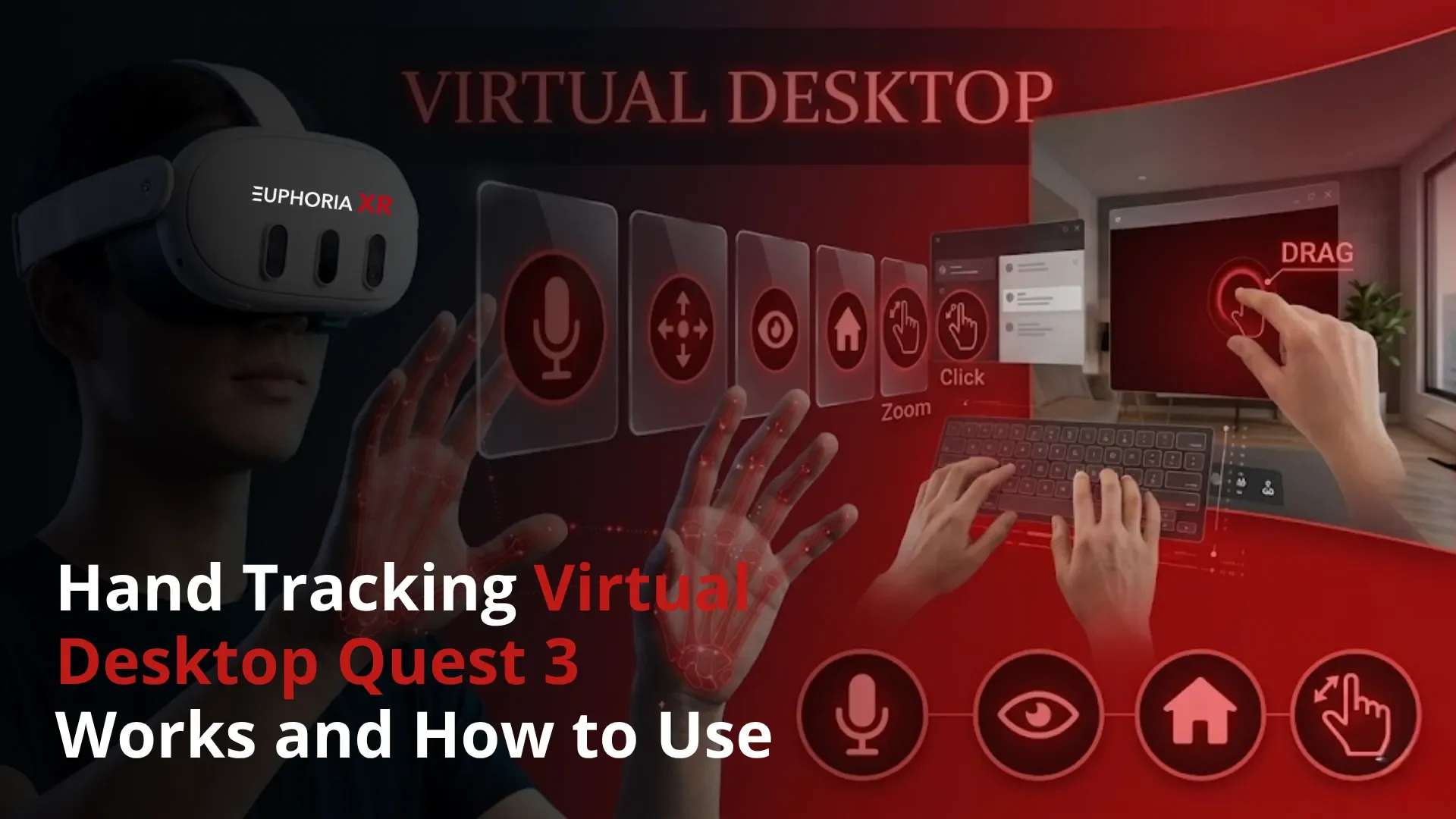
Virtual Desktop is an app that helps you to use your PC inside VR.
It streams your pc display to your Quest 3 headset.
With this method, you may:
Unlike integrated Quest apps, Virtual Desktop depends on:
Because of this setup, functions as hand monitoring behave in another way in comparison to local Quest studies.
How Hand Tracking Works on Quest 3?
The Quest 3 makes use of built-in cameras to track your arms in real time. It observes your hands, your hand role, and small moves like pinching. This is done using laptop imagination and AI, so no controllers are needed.
When you move your hands, the machine maps your finger positions and converts them into moves. For example, a pinch gesture acts like a click, and conserving that pinch can let you drag or select objects.
According to Meta, hand tracking is designed to sense naturally. Instead of urgent buttons, you engage in the identical way you would within the real world.
This works best in local Quest environments like menus and built-in apps. These stories are designed for gesture enter, so tracking feels smooth and responsive.
Hand Tracking in Virtual Desktop: What Actually Works?
Inside Virtual Desktop, the experience is unique.
Hand monitoring nonetheless works, however, not in the same way as local apps. You can use it to open menus, pinch to select gadgets, and perform simple navigation. For mild computer use, it feels usable.
However, after you strive, more complicated limitations appear. Actions like scrolling, dragging windows, or interacting with detailed interfaces can feel inconsistent. In gaming or speedy actions, it regularly breaks down completely.
The cause is simple. Virtual Desktop is streaming your PC into VR. Your hands are tracked on the headset, then converted into input, and in the end, dispatched to your pc. This greater layer reduces accuracy and adds a delay.
You can think of it like this:
Each step introduces a small gap between what you do and what occurs on the display screen.
The result is apparent. Hand tracking in Virtual Desktop is beneficial for easy obligations, but it isn’t reliable for precision or high velocity interplay.
How to Enable Hand Tracking on Quest 3?
Enabling hand tracking on Quest 3 is simple; it needs to be achieved correctly for it to work easily later.
Start by opening settings in your headset. Go to the motion or tracking segment and turn on hand tracking. Once enabled, the headset will automatically rest upon your palms whilst controllers are not in use.
Make certain your environment is set up nicely. Hand monitoring depends heavily on visibility. Your hands ought to be truly in front of the headset, and the room doesn’t need to be too dark or too bright.
A few matters that help improve accuracy:
Keep your hands in the headset’s field of view
Avoid fast or unexpected moves
Ensure there are enough lights around you
If hand tracking isn’t always enabled right here, it will not work in apps like Virtual Desktop.
How to Use Hand Tracking in Virtual Desktop?
Once hand tracking is enabled, using its inner Virtual Desktop is easy, however expectancies need to be sensible.
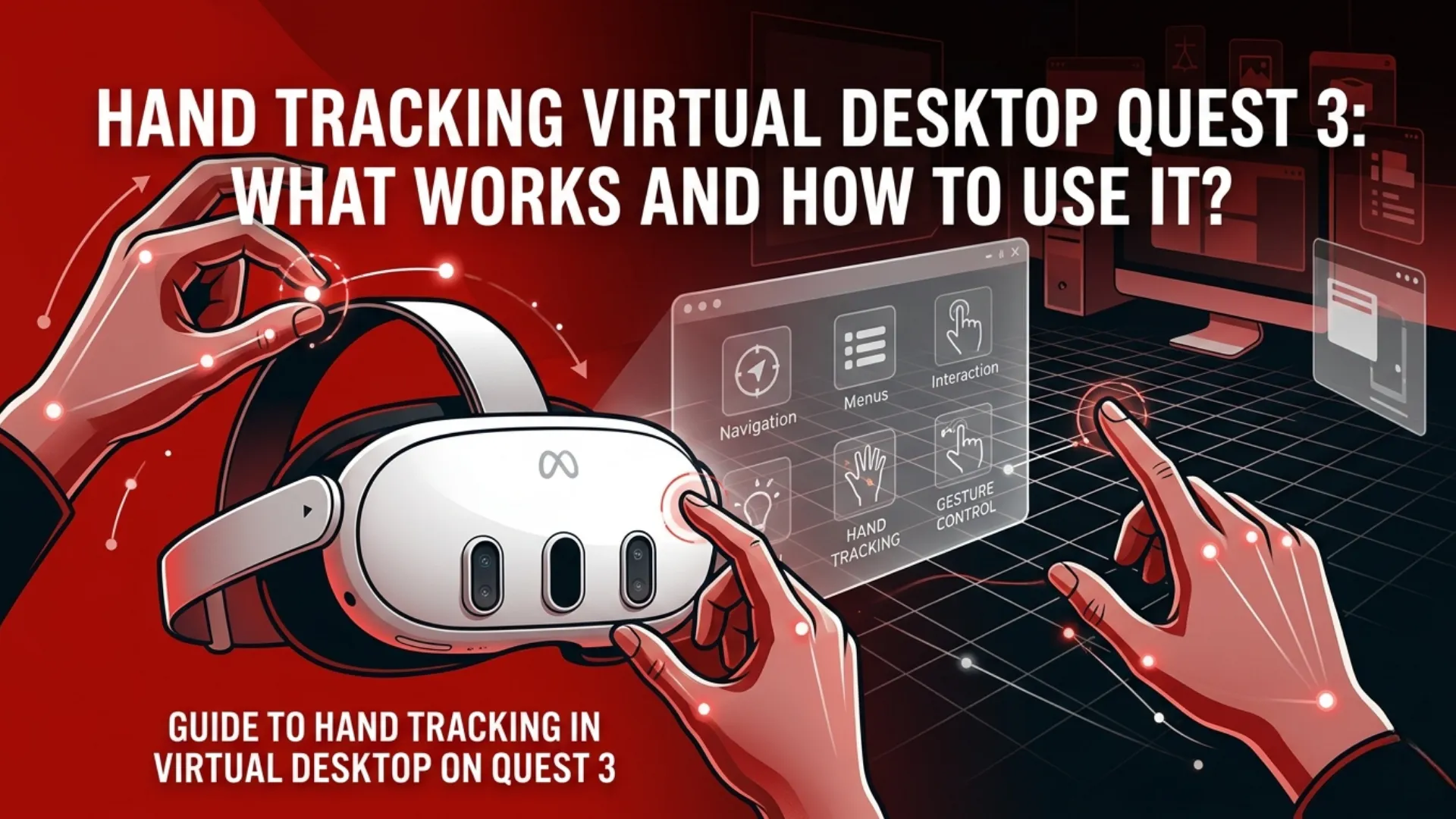
Start by launching Virtual Desktop on your Quest 3 and connecting it to your PC. Once you’re within the digital environment, the headset will transfer handy tracking automatically if controllers aren’t active.
You can then use simple gestures to engage:
Pinch to pick out or click on
Pinch and preserve to pull
Move your hand to navigate
Keep your hands consistent and within view. Slow actions work better than fast ones. This facilitates the system to recognize your gestures even more as it should be.
In practice, hand monitoring works exceptionally well for basic interactions like beginning apps, choosing alternatives, or browsing your desktop. For more complex duties, specifically something that requires precision, controllers still perform better.
A simple way to think about it is this: hand tracking is beneficial for convenience, at the same time as controllers are better for management.
Hand Tracking Not Working in Virtual Desktop? Fix These Issues
If hand monitoring isn’t always running in Virtual Desktop on your Meta Quest 3, the trouble is usually not one factor. It is often a mix of settings, environment, or system boundaries.
Hand Tracking Not Detected
If your hands are not detected in any respect, begin with the fundamentals.
Make certain hand tracking is enabled in your headset settings. Sometimes the gadget defaults again to controllers, especially after a restart.
Also, test your environment. If your fingers aren’t truly visible to the cameras, monitoring will fail. Poor lighting fixtures or blocked sensors can forestall detection right away.
A quick reset is frequently enabled. Restart the headset and open Virtual Desktop once more.
Gestures Not Working Properly
If your arms are seen, however, gestures are inconsistent, the issue is typically tracking best.
Hand tracking works nicely whilst actions are gradual and clean. Fast or unexpected gestures can confuse the gadget. Keep your hands steady and inside view.
Lighting performs a massive function right here. Very dim or overly bright environments lessen accuracy. Even shadows for your fingers can have an effect on detection.
In simple phrases, the clearer the visual input, the better the gestures work.
Virtual Desktop Not Responding to Hands
Sometimes hand tracking works inside the headset, but no longer in the internal Virtual Desktop.
This takes place because Virtual Desktop has to translate your gestures into PC input. Not all actions are absolutely supported.
Try restarting the app and reconnecting it to your PC. Also, make sure the app is up to date with the present-day model.
If it still does not respond, it’s far more likely a predicament instead of a worm. Some interactions are, without a doubt, no longer supported.
Lag or Poor Accuracy
If everything works, but feels gradual or faulty, the issue is normally performance-related.
Virtual Desktop depends on your network. A susceptible WiFi connection can introduce a delay between your hand movement and the response on the display screen.
Stay close to your router and avoid network congestion. A solid connection improves each monitoring response and average reliability.
Accuracy can also drop if your PC is under a heavy load. Streaming, rendering, and enter processing all appear collectively, so overall performance is subject to.
Most hand tracking problems in Virtual Desktop are because of settings, lighting fixtures, or environmental conditions. Once those are optimized, the fun turns into extraordinarily smoother, though nevertheless limited in comparison to controllers.
Hand Tracking vs Controllers in Virtual Desktop
When Meta Quest 3 is used with Virtual Desktop, the selection between hand tracking and controllers depends on what you are trying to do.
Hand monitoring feels natural. You just use your palms. There aren’t any buttons or hardware involved. This makes it splendid for easy interplay and casual use.
Controllers, alternatively, are constructed for precision. They come up with reliable entry, quicker response, and full compatibility across apps.
Here is an easy assessment:
The difference becomes clear in actual use.
Hand monitoring is pleasant but not usually correct. Controllers sense less natural, but they perform on every occasion.
If the project needs to be managed, controllers win. If the challenge requires simplicity, hand tracking can be sufficient.
When Should You Use Hand Tracking in a Virtual Desktop?
Hand monitoring is satisfactory when the task is straightforward and no longer requires precision.
It works nicely for:
In those conditions, using your hands feels clean and convenient. You do not want to pick up controllers, and the enjoyment feels more herbal.
However, it isn’t always the right preference for everything.
You should keep away from hand tracking when:
In those cases, delays and monitoring limits grow to be considerable.
A realistic method is to apply both. Start with hand tracking for light responsibilities, and transfer to controllers when you want control.
This stability offers you a great experience in Virtual Desktop.
Limitations of Hand Tracking in Virtual Desktop
Hand monitoring in Virtual Desktop on Meta Quest 3 is useful, but it comes with clear limits.
The biggest trouble is that it is not designed for complete PC level control. Since the whole lot is streamed and translated, performance depends on multiple factors.
Key limitations:
Lower precision compared to controllers, specifically for small or rapid moves
Limited compatibility with many PCVR apps that assume controller input
Input delay because of streaming from the headset to the PC
Gesture inconsistency in complex interfaces
Strong dependence on lighting and hand visibility
Tracking can spoil if palms flow out of view
These obstacles make hand tracking appropriate for primary use, but no longer dependable for annoying tasks.
Alternatives If Hand Tracking Doesn’t Work Well
If hand monitoring feels unreliable, there are other alternatives.
The only opportunity is the use of controllers. They offer solid input, excessive accuracy, and complete compatibility throughout all apps. For gaming or certain paintings, controllers are still a pleasant desire.
Another choice is the use of built-in streaming capabilities from Meta, along with Air Link. These are more tightly incorporated with the headset and may, on occasion, offer smoother input supervision.
A practical technique is to combine both techniques. Use hand tracking for easy navigation and transfer to controllers whilst precision is wanted. This hybrid setup offers a more balanced revel in.
Is Hand Tracking Support Improving in Virtual Desktop?
Yes, hand tracking assistance is improving slowly.
Updates from Meta and developers are making gesture popularity better and reducing the number of earlier obstacles. Over time, monitoring accuracy and responsiveness have improved compared to older versions.
However, it’s still evolving. Hand tracking in PCVR environments is more complicated than in local apps. It calls for higher integration among the headset, software program, and PC.
This way, enhancements will be maintained, but complete controller stage performance isn’t always predicted in the near term.
Conclusion
Hand tracking virtual desktop quest 3 works for fundamental obligations like navigation and easy interaction, but it isn’t a full substitute for controllers. It gives convenience and an extra natural experience, however comes with limits in precision, compatibility, and responsiveness. For pleasant enjoyment, use hand monitoring for mild use and transfer to controllers whilst maintaining accuracy and managing.