














Google Nano Banana AI in Search, NotebookLM, and Photos
The Nano Banana AI by Google has been expanded to Search, NotebookLM, and Photos, introducing the use of fast and creative image creation and editing in daily workflows.
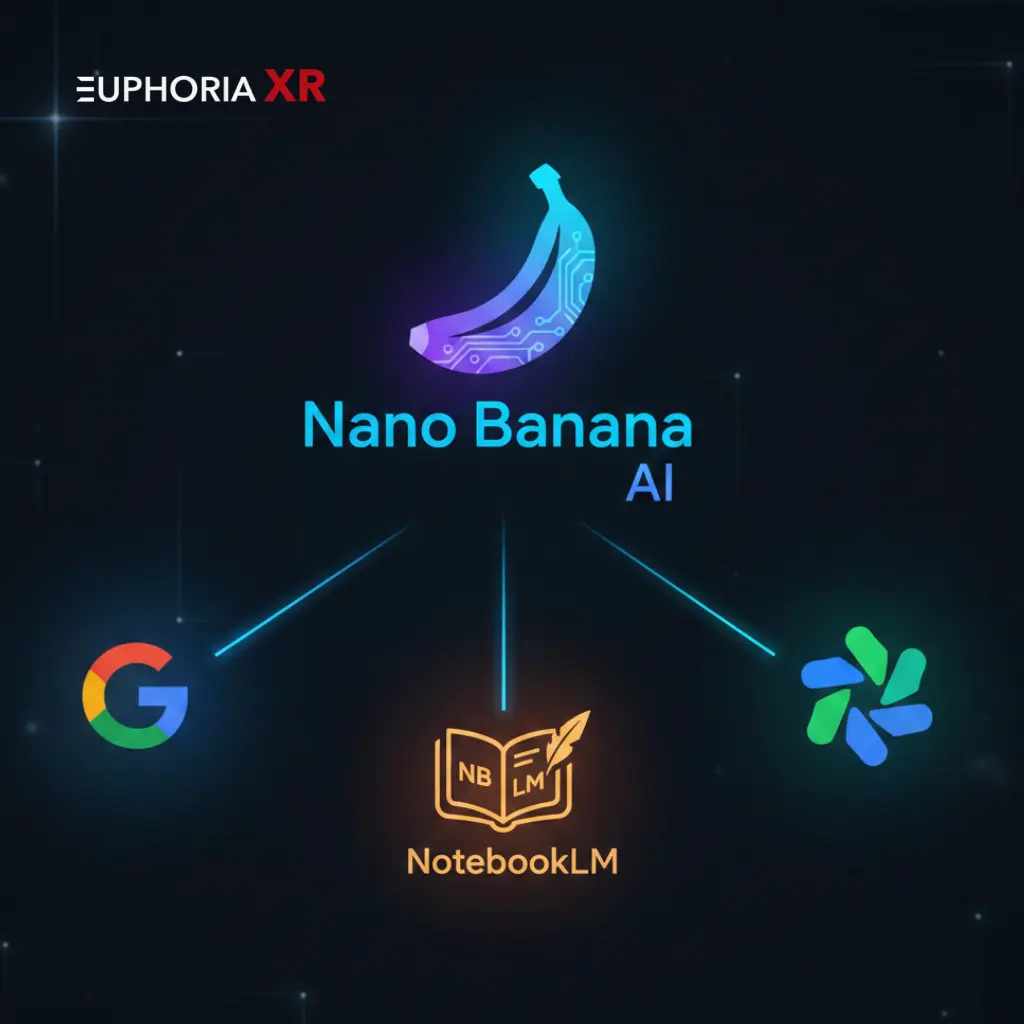
Google introduced the lightweight but powerful Gemini 2.5 Flash image model Nano Banana AI, but it is no longer confined to the Gemini app; it is already implemented in Google Search, NotebookLM, and will soon be implemented in Google Photos.
This release is a significant change in user workflows that will generate, edit, and engage with images throughout the Google ecosystem and change the daily workflows of visual generation near-instantly.
What Is Google’s Nano Banana AI?
The name Nano Banana is used as a nickname of Google’s Gemini 2.5 Flash Image Model, a fast and mobile-optimized generative AI engine that can perform realistic and consistent image editing. It has already created over five billion images since its launch in August 2025, popularized by its capability to preserve subject identity between a series of edits and styles. It is fast and precise and makes photo transformations, creative restyling, and the generation of text-prompt images possible within a few seconds.
Related: https://euphoriaxr.com/3d-ai-nano-banana-image-prompt/
Why Nano Banana’s Expansion Matters?
The idea of Nano Banana joining the main Google platforms is not in vain, as it will put high visual AI within the tools that billions are using every day. No longer do consumers need to go to apps or creative software to produce any visuals, but can now create visuals in Search, Lens, and NotebookLM. This change makes visual production easier, faster, and makes generative image editing part of the everyday work process. It is an indication of the ever-growing overlap between AI-based content creation and spatial content pipes in the areas of XR and immersive technology.
Nano Banana in Google Search (via Lens)
Lens made Google Search have a new Create Mode that is fueled by Nano Banana. Users are able to take a picture or use one of their galleries and immediately use it to create transformation effects by using natural language-created prompts. This involves the editing of actual images, rearranging images, or creating entirely original images altogether. Mobile-first image generation is now available at a large scale with the update first launched in the United States and India on Android and iOS.
Nano Banana in NotebookLM
The popular Video Overviews with notebookLM can now be further boosted by Nano Banana, which allows people to have a visual overview of their user documents in terms of contextual illustrations. The users have several options of the creative styles available to them: watercolor, anime, papercraft, whiteboard, retro print, and heritage art, depending on the tone and intent of the content they want to post. NotebookLM is now also able to use two output modes:
- Explainer, for in-depth visual touring.
- Brief, for gainful thinking.
These additions allow students, researchers, and teams to have a better grasp of complex information more intuitively and in a much shorter amount of time.
Nano Banana Coming to Google Photos
Google Photos will launch support for Nano Banana in the next few weeks to provide users with AI-enhanced editing options right in the Photos app, allowing them to refine and adjust portraits, tweak scenes, or improve the quality of a photograph, or supply it with stylistic effects that they will not have to edit in third-party applications. This anchors Photos as a smarter, more artistic media platform, providing amateur individuals with photo-editing capabilities on the pro-level.
Why the Model Performs Well?
The performance strength of Nano Banana has three key strengths:
- Consistency: It maintains the facial features and identity of the original subject in changes.
- Fidelity: It generates much detailed, realistic, and coherent imagery.
- Speed: Its mobile design has the ability to generate speed.
The features allow the model to be used in both fast editing and more elaborate visual storytelling.
Safety and Ethics
Because of the viral popularity of Nano Banana, law enforcement agencies have cautioned users against counterfeit third-party applications that pretended to be Nano Banana editors. To avoid fraud or misuse of data, only approved Google applications, Lens, and NotebookLM should be used. As well, the U.S. Federal Trade Commission is undergoing an active examination of the AI systems offered by Google in terms of expanded safety and compliance provisions. With the spread of generative image technology, users are expected to use it responsibly, particularly when using it to edit or create images of actual individuals.
Impact on Creativity, Productivity, and XR
When Nano Banana is incorporated into the ecosystem of Google, the transition to AI-native creativity will be quicker. Within seconds, users can create an idea and create visual output, changing the way things are done in education, research, content creation, and even in enterprise communication.
In the case of XR, in particular, this opens:
- Faster asset prototyping
- Artificial intelligence Concept visualization.
- Live creation of visual components of AR/VR environments.
- Improved pre-production pipelines of the immersive environment.
The use of multimodal AI in driving massive spatial computing and 3D content pipes will continue to increase as this technology continues to develop.
Conclusion
The launch of Google Nano Banana is a new step in the accessibility of Generative AI. Incorporating image creation superior to the best operations directly into Search, NotebookLM, and eventually Photos, Google is altering the way consumers engage with images. The result of the change is a democratization of creativity, improving productivity, and the preconditions of further AI-enabled immersive experiences. Users can use all the potential of this new toolset with the appropriate knowledge of safety practices.
Frequently Asked Questions (FAQs)
What is Nano Banana AI?
Nano Banana is Google 2.5 Flash Image Model Gemini, a rapid, reliable, mobile-friendly generative artificial intelligence model that converts text to images.
How to use it in Google Search?
Open Google Lens within the Google application, select Create Mode, take or upload a photo, and use your own words to make edits.
What features does it add to NotebookLM?
It improves Video Overviews by means of contextual illustrations, introduces several visual styles, and complies with Explainer and summary formats.
When is it coming to Google Photos?
Google has already assured that Nano Banana will be part of Google Photos within weeks, which will allow AI-based editing in the application itself.
Are there safety concerns?
Yes. Copies of Nano Banana have been found. The tool should not be used in unofficial apps by users to eliminate scams or data abuse.
How does it affect XR workflows?
Nano Banana accelerates the visual ideation, asset prototyping, and concept development, helping create content faster and more agile in AR, VR, and immersive experiences.